
Chakra healing can feel confusing at first, especially if you are new to energy work. Words like “alignment,” “blockages,” or “activation” often sound abstract, making beginners wonder where to start and whether they are doing it correctly. The truth is, chakra healing does not require special abilities, long meditation hours, or deep spiritual knowledge. It is simply a practice of learning to listen to your body, emotions, and inner signals with more awareness and care.
This 30-day step-by-step chakra healing plan is designed specifically for beginners. It moves slowly, gently, and practically, allowing you to build consistency without pressure. Each day focuses on simple actions – such as breathing, awareness, reflection, and small lifestyle shifts – that help your energy centres rebalance naturally over time. Instead of forcing change, the plan encourages patience and self-kindness, which are essential for true healing.
Over these 30 days, you will explore all seven chakras from the root to the crown, while also learning how emotional patterns, daily habits, and mental states affect your energy flow. By the end of the month, you may notice subtle but meaningful changes, such as better emotional balance, improved focus, reduced stress, and a deeper connection with yourself. This journey is not about perfection – it is about progress, awareness, and gentle transformation.
Understanding Chakras: A Simple Explanation for Beginners
If you are new to chakra healing for beginners, the concept can feel mysterious or even overwhelming at first. Chakras are often described as energy centres within the body, but this definition alone does not fully explain their role in daily life. A simple way to understand chakras is to see them as meeting points where the body, mind, and emotions interact. When these centres are balanced, energy flows smoothly, supporting physical comfort, emotional stability, and mental clarity. When they are imbalanced, we may feel stuck, anxious, tired, or disconnected without an obvious reason.
The idea of chakras comes from ancient Indian traditions and has been practiced for thousands of years. The word “chakra” means “wheel” or “disc” in Sanskrit, symbolising spinning centres of energy. While chakras are not physical organs you can touch, they are closely linked to the nervous system, hormonal balance, and emotional patterns. Modern chakra healing focuses less on belief and more on awareness – how your inner state affects your outer experience.
There are seven main chakras, each aligned along the spine, from its base to the top of the head. Each chakra governs specific emotional themes, physical areas, and life experiences. Together, they form an interconnected system. When one chakra is out of balance, it can influence the others, which is why chakra healing often works best as a whole-body and whole-life approach rather than focusing on just one area.
The Root Chakra, located at the base of the spine, is associated with safety, stability, and survival. It reflects how secure you feel in your daily life, including finances, housing, and basic needs. When the root chakra is balanced, you tend to feel grounded and calm. When it is imbalanced, fear, insecurity, restlessness, or constant worry may appear. For beginners, grounding practices such as slow breathing, walking barefoot, or creating daily routines help stabilise this energy centre.
Just above the beginner chakra guide, which relates to emotions, creativity, pleasure, and relationships. This chakra influences how you experience joy and how comfortably you express your feelings. A balanced sacral chakra supports emotional flow and creativity, while an imbalance can lead to emotional numbness, guilt, or mood swings. Beginners often benefit from gentle movement, creative activities, or simply allowing emotions to be felt without judgement.
The Solar Plexus Chakra, located in the upper abdomen, governs confidence, self-worth, and personal power. It shapes how you see yourself and how you respond to challenges. When balanced, you feel capable and motivated. When blocked or overactive, you may struggle with low self-esteem, control issues, or chronic stress. Simple practices such as posture awareness, positive self-talk, and mindful decision-making can gradually restore balance here.
The Heart Chakra sits at the centre of the chest and acts as a bridge between the lower and upper chakras. It is associated with love, compassion, forgiveness, and emotional balance. A healthy heart chakra allows you to give and receive love freely. Imbalances may show up as emotional withdrawal, resentment, or difficulty trusting others. For beginners, heart chakra healing often starts with self-compassion, gratitude, and small acts of kindness rather than intense emotional work.
The Throat Chakra is connected to communication, truth, and self-expression. It influences how honestly and clearly you express your thoughts and feelings. When this chakra is balanced, communication feels natural and confident. When imbalanced, you may fear speaking up or feel misunderstood. Simple practices like mindful listening, journaling, or speaking your thoughts aloud in a safe space can gently support throat chakra balance.
Above the throat is the Third Eye Chakra, associated with intuition, insight, and mental clarity. This chakra helps you trust your inner guidance and understand the bigger picture. Imbalances may cause confusion, overthinking, or disconnection from intuition. Beginners can nurture this chakra through quiet reflection, limiting mental overload, and paying attention to inner cues rather than forcing answers.
The Crown Chakra, located at the top of the head, represents connection to meaning, purpose, and higher awareness. It is not about religion but about feeling connected to life itself. When balanced, it brings a sense of peace and trust. When imbalanced, you may feel lost or disconnected. Gentle practices such as silence, reflection, or mindful breathing are often enough for beginners.
Understanding chakras is not about fixing yourself. It is about becoming more aware of how your body, emotions, and thoughts interact. Chakra healing begins with noticing, not forcing change. With patience and consistency, this awareness becomes a powerful tool for balance, growth, and inner harmony.
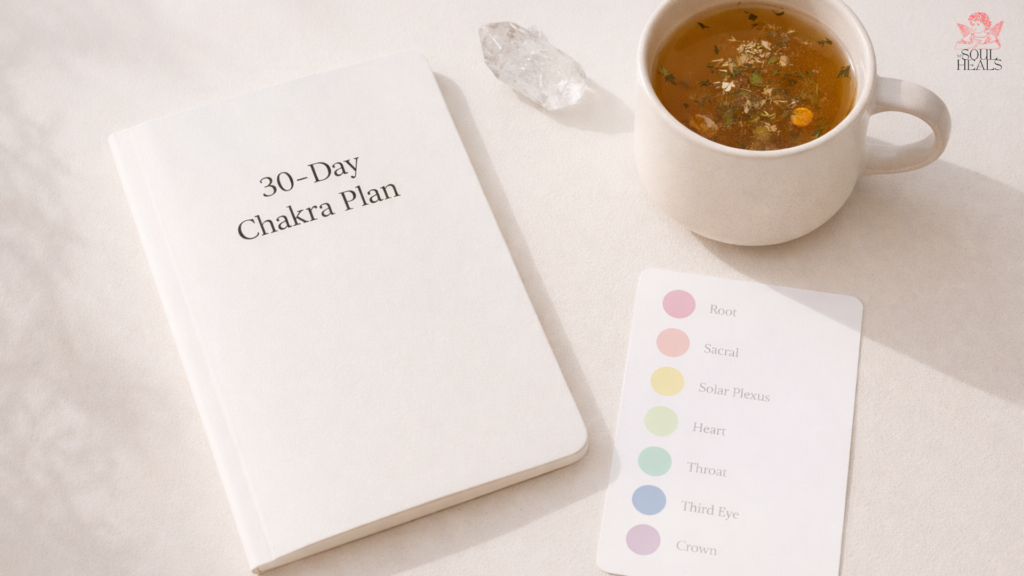
How This 30-Day Chakra Healing Plan Works
This 30-day chakra healing plan is designed to be simple, gentle, and realistic for beginners. Instead of overwhelming you with complex rituals or long meditation sessions, it focuses on small daily practices that gradually build awareness and balance. The plan follows a step-by-step structure, allowing your mind and body to adjust naturally as you move through each chakra.
Each week of the plan is dedicated to a specific theme, starting with grounding and safety, and slowly moving upward toward clarity and purpose. This upward flow mirrors the natural order of the chakra system, helping energy stabilise at the base before expanding to higher centres. By working in this sequence, you avoid emotional overload and create a stronger foundation for deeper healing.
The daily practices are intentionally short and flexible, making it easy to stay consistent even on busy days. Some days focus on physical awareness, while others emphasise emotional reflection or mental clarity. This balance ensures that chakra healing becomes part of your daily life rather than something separate from it.
What to expect from the 30-day plan:
- Daily practices that take 10–20 minutes and can be adjusted to your comfort level
- A slow, structured progression from the root chakra to the crown chakra
- Simple techniques such as breathing, body awareness, reflection, and intention setting
- Emotional support without forcing release or reliving past experiences
- Increased self-awareness rather than instant or dramatic changes
The plan also includes rest and integration days. These are just as important as active practice days, as they allow insights and emotional shifts to settle naturally. Healing is not about doing more; it is about allowing space for balance to return.
Throughout the 30 day chakra plan, you are encouraged to observe your experiences without judgement. Some days may feel calm and clear, while others may bring up emotions or resistance. This is a normal part of energy work and does not mean you are doing anything wrong.
Most importantly, this plan honours personal pace. You are not required to feel or experience anything specific. Chakra healing works subtly, often showing results through improved emotional balance, better focus, and a stronger connection to yourself over time. By the end of the 30 days, you will have built a foundation that you can continue, repeat, or deepen in a way that feels supportive and sustainable.
Week 1: Building Awareness and Grounding the Root Chakra
Week 1 lays the foundation for the entire 30-day chakra healing journey. The root chakra is the base of the chakra system, and without stability here, it becomes difficult for higher chakras to feel balanced or supported. This week is not about deep emotional release or intense spiritual experiences. Instead, it focuses on awareness, safety, and grounding – helping you feel more present and secure in your body and daily life.
The root chakra, also known as Muladhara, is located at the base of the spine. It governs your sense of physical safety, stability, and basic survival needs such as shelter, food, financial security, and routine. When the root chakra is balanced, you tend to feel calm, supported, and steady. When it is imbalanced, you may experience anxiety, constant worry, restlessness, or a feeling of being “ungrounded.”
During this first week, the goal is to slow down and reconnect with your body. Many beginners spend most of their time in their thoughts, disconnected from physical sensations. Root chakra work gently brings awareness back to the body, helping your nervous system feel safe enough to relax.
Each day in Week 1 encourages simple grounding practices that fit naturally into everyday life. You may begin with mindful breathing, focusing on slow, deep breaths that travel down toward the lower body. This type of breathing signals safety to the body and reduces stress. As the days progress, you may also practice body awareness by noticing how your feet connect with the ground when standing or walking.
Creating stability in daily routines is another important part of root chakra healing. Waking up at consistent times, eating regular meals, and prioritising rest help reinforce a sense of structure. These small habits may seem ordinary, but they send powerful signals of safety and predictability to the nervous system.
Physical grounding plays a key role this week. Gentle activities such as stretching, slow walking, or spending time in nature help anchor your awareness in the present moment. Even sitting quietly and noticing physical sensations – like the weight of your body on a chair – can be deeply grounding. There is no need for intense exercise; the focus is on presence, not performance.
Emotionally, Week 1 may bring awareness to fears or insecurities that often go unnoticed. You are not expected to fix or analyse them. Simply noticing patterns of worry, tension, or avoidance is enough. Observation without judgement is a form of healing in itself.
You may also work with intention-setting during this week. A simple intention such as “I am safe in this moment” or “I trust my body to support me” can be repeated gently throughout the day. These intentions are not affirmations you need to force yourself to believe; they are reminders that help calm the mind and body over time.
By the end of Week 1, many beginners notice subtle changes rather than dramatic shifts. You may feel slightly calmer, more present, or more aware of your physical needs. These small signs are important. Root chakra healing is slow and steady, just like the energy it represents.
This first week teaches an essential lesson: healing begins with safety and awareness. When you feel grounded in your body and daily life, you create a stable base for the emotional and energetic work that follows in the coming weeks.

Week 2: Emotional Healing Through the Sacral Chakra
Week 2 focuses on the sacral chakra, the centre of emotions, creativity, pleasure, and connection. After establishing a sense of safety and grounding in Week 1, the body and mind are better prepared to explore emotional flow. This week is about allowing feelings to move naturally rather than suppressing, judging, or controlling them. Emotional healing at the sacral level is gentle and fluid, not intense or forceful.
The sacral chakra, known as Svadhisthana, is located just below the navel in the lower abdomen. It governs how you experience emotions, intimacy, creativity, and enjoyment in life. When this chakra is balanced, emotions feel manageable and expressive, creativity flows naturally, and relationships feel more harmonious. When imbalanced, you may experience emotional numbness, guilt, mood swings, attachment issues, or difficulty experiencing joy.
During Week 2, the focus shifts from structure to flow. Unlike the root chakra, which thrives on routine and stability, the sacral chakra responds best to movement, softness, and emotional honesty. You are encouraged to listen to your emotional responses without trying to label them as good or bad.
A key theme this week is emotional awareness. Many people unconsciously block emotions because they feel overwhelming or inconvenient. Sacral chakra healing begins by simply recognising what you feel in the moment. This might include subtle emotions such as irritation, sadness, excitement, or longing. The goal is not to analyse these emotions but to acknowledge them with compassion.
Physical movement plays an important role in sacral chakra healing. Gentle, flowing movements help release stored emotional tension in the hips and lower abdomen. Activities do not need to be structured or perfect. Even small, mindful movements can create emotional release and balance.
Creative expression is another essential part of this week. Creativity does not require artistic talent. It is about allowing self-expression without judgement. Engaging in creative activities helps the sacral chakra open naturally and reconnects you with joy and curiosity.
Practices you may explore during Week 2 include:
- Gentle hip-opening stretches or slow, fluid body movements
- Mindful breathing focused on the lower abdomen
- Journaling emotions freely without editing or analysing
- Engaging in creative activities such as drawing, writing, music, or cooking
- Spending time near water, such as baths or mindful hand washing
- Allowing moments of pleasure without guilt, such as rest or enjoyable hobbies
Emotionally, this week may bring sensitivity. You may notice old feelings resurfacing or a stronger awareness of emotional patterns in relationships. This is a natural part of sacral chakra healing. You are not required to act on every emotion – simply noticing and allowing them to exist is enough.
It is also common to observe changes in how you relate to pleasure and boundaries. You may realise where you deny yourself joy or where you overextend emotionally for others. Sacral chakra balance encourages a healthy relationship with desire, choice, and emotional boundaries.
Affirmations can support emotional flow during this week. Simple phrases such as “It is safe to feel my emotions” or “I allow joy and creativity into my life” can be repeated gently, especially during moments of emotional resistance.
By the end of Week 2, many beginners notice a softer relationship with their emotions. Feelings may still arise, but they often feel less overwhelming and more understandable. Creativity may feel more accessible, and moments of joy may come more easily.
Week 2 teaches an important truth: emotions are not obstacles to healing – they are pathways. When you allow emotions to move freely, the sacral chakra begins to restore balance naturally, supporting emotional resilience, creativity, and deeper self-connection.
Week 2 Continued: Strengthening Confidence with the Solar Plexus Chakra
As Week 2 continues, the focus shifts from emotional flow to personal power through the solar plexus chakra. Once emotions are acknowledged and allowed to move, it becomes easier to understand how they influence confidence, motivation, and self-worth. The solar plexus chakra acts as the bridge between feeling and action, helping you turn inner awareness into confident choices.
The solar plexus chakra, known as Manipura, is located in the upper abdomen, just below the ribcage. It governs self-esteem, willpower, decision-making, and personal identity. When this chakra is balanced, you feel capable, self-assured, and clear about your direction. When it is imbalanced, self-doubt, people-pleasing, procrastination, or the need to control situations may arise.
This phase of the plan is not about becoming dominant or forceful. True solar plexus healing is about quiet confidence – the ability to trust yourself, respect your boundaries, and act from inner clarity rather than fear or approval-seeking.
Awareness is a key element during this stage. Many people underestimate how often they override their own needs to avoid discomfort or conflict. Solar plexus healing begins by noticing where you give away your power, even in small daily interactions. This awareness alone can create meaningful shifts.
Physical posture also plays a role in strengthening this chakra. Slouching or collapsing the chest can unconsciously signal insecurity to the body and mind. Gentle posture awareness – standing or sitting upright without tension – helps reinforce a sense of inner strength and stability.
Breathing into the upper abdomen can activate the solar plexus area. Slow, controlled breaths encourage a calm but empowered state, reducing anxiety while increasing focus. This type of breathing supports emotional regulation and mental clarity at the same time.
Daily decision-making becomes a practice during this phase. You are encouraged to make small, intentional choices – what to eat, when to rest, when to say no – without overthinking or second-guessing yourself. Each small choice reinforces trust in your inner guidance.
Supportive practices for solar plexus chakra healing include:
- Mindful breathing focused on the upper abdomen
- Gentle core-strengthening or posture-based movements
- Noticing and honouring personal boundaries
- Replacing self-critical thoughts with neutral or supportive language
- Setting one small, achievable goal each day
- Reflecting on moments where you acted from confidence rather than fear
Emotionally, this stage may reveal patterns of self-judgement or comparison. Instead of trying to eliminate these thoughts, the goal is to soften their impact. Observing them without attaching to them helps reduce their influence over time.
Affirmations can support solar plexus balance when used gently. Phrases such as “I trust myself” or “I have the right to take up space” can be repeated during moments of hesitation or self-doubt.
By the end of this phase, many beginners notice subtle but meaningful shifts. You may feel more decisive, less apologetic, or more comfortable expressing your needs. These changes reflect strengthening inner confidence rather than external validation.
This continuation of Week 2 reminds you that emotional awareness and personal power work together. When emotions are honoured and confidence is nurtured, the solar plexus chakra supports steady self-belief, resilience, and empowered action in everyday life.

Week 3: Opening the Heart Chakra for Balance and Compassion
Week 3 shifts the focus from personal stability and confidence to emotional balance through the heart chakra. After grounding the body, allowing emotions to flow, and strengthening inner confidence, the heart chakra creates harmony between the lower and upper energy centres. This week is about balance – between giving and receiving, self-care and compassion for others, emotional openness and healthy boundaries.
The heart chakra, known as Anahata, is located at the centre of the chest. It governs love, empathy, forgiveness, trust, and emotional connection. When chakra basics are balanced, relationships feel supportive, emotions feel manageable, and self-acceptance grows naturally. When imbalanced, you may experience emotional withdrawal, resentment, fear of intimacy, over-giving, or difficulty trusting others.
Heart chakra healing is not about forcing forgiveness or opening emotionally before you feel ready. Instead, it begins with gentleness and self-compassion. Many people try to heal others while neglecting their own emotional needs. This week encourages you to turn compassion inward first.
Breathing practices play a central role during this stage. Slow, deep breaths into the chest area help release emotional tension stored around the heart. You may notice tightness or sensitivity at first, which is normal. With continued awareness, the breath gradually softens emotional defences without overwhelming the nervous system.
Emotional balance is another key theme of Week 3. Rather than suppressing emotions or becoming consumed by them, heart chakra work teaches you to observe feelings with kindness. You learn to allow emotions to exist without identifying with them completely. This creates emotional resilience rather than emotional avoidance.
Relationships often come into focus during this week. You may become more aware of where you give too much or hold back out of fear. The heart chakra supports healthy emotional exchange, where care flows without self-sacrifice or emotional shutdown.
Supportive practices for opening the heart chakra include:
- Gentle breathing focused on the chest and upper lungs
- Practising gratitude, even for small daily moments
- Acts of kindness toward yourself and others without expectation
- Reflective journaling about emotional patterns in relationships
- Noticing where emotional boundaries feel unclear or strained
- Spending time in calm, nurturing environments
This week may also bring emotional sensitivity. You might feel more tender or aware of emotional wounds, both past and present. This does not mean the chakra is weakening; it often indicates that emotional awareness is deepening. Moving slowly and prioritising rest is important during this phase.
Forgiveness may arise naturally, but it should never be forced. Heart chakra healing respects emotional timing. Sometimes forgiveness begins simply by releasing the pressure to forgive before you are ready.
Affirmations can gently support this process. Simple phrases such as “I am open to love in a safe way” or “I treat myself with kindness and understanding” can help reinforce emotional safety.
By the end of Week 3, many beginners experience a greater sense of emotional balance rather than intense emotional highs. You may feel calmer in relationships, less reactive, and more connected to yourself. Compassion begins to feel less like an effort and more like a natural state.
Week 3 teaches that true heart opening is not about vulnerability without protection. It is about balance – where love, compassion, and emotional strength exist together, creating harmony within and around you.
Week 3 Continued: Improving Expression with the Throat Chakra
As Week 3 continues, the focus moves from emotional balance to clear and honest expression through the throat chakra. After opening the heart chakra, many people become more aware of feelings they have never fully expressed. The throat chakra helps transform inner awareness into spoken truth, allowing emotions, thoughts, and needs to be communicated calmly and confidently.
The throat chakra, known as Vishuddha, is located at the centre of the throat. It governs communication, self-expression, truth, and authenticity. When this chakra is balanced, you are able to speak honestly without fear and listen without judgement. When it is imbalanced, you may struggle to speak up, fear being misunderstood, over explain, or suppress your true opinions to maintain peace.
Throat chakra healing is not about talking more or dominating conversations. It is about expressing yourself with clarity and integrity while respecting others. This week encourages mindful communication rather than impulsive reactions.
Awareness is the first step in improving expression. You may begin to notice moments when you hold back your truth or say yes when you mean no. Observing these patterns without criticism allows space for change. Often, communication habits are formed from past experiences where speaking up felt unsafe. This chakra responds best to patience and reassurance.
Breath awareness supports throat chakra balance. Gentle breathing that flows naturally through the throat can release tension in the neck and jaw. You may notice tightness in these areas, which often reflects unspoken emotions or habitual silence.
Listening is just as important as speaking during this phase. Conscious listening – without interrupting or preparing a response – helps balance the throat chakra. It reinforces respect for communication as an exchange rather than a performance.
Self-expression does not need to be public or confrontational. Journaling, writing letters you do not send, or speaking thoughts aloud in a private space can help release blocked expression. These practices allow truth to emerge without pressure.
Supportive practices for throat chakra healing include:
- Gentle neck and jaw relaxation exercises
- Slow, mindful breathing focused on the throat area
- Journaling honest thoughts without editing or censoring
- Practising clear but kind communication in daily interactions
- Reading or speaking affirmations aloud
- Observing moments of silence and noticing how they feel
Emotionally, this phase may bring awareness to suppressed feelings such as resentment, frustration, or fear of judgement. These emotions are not problems to fix; they are signals pointing toward unexpressed truth. Allowing them to surface gently supports long-term balance.
Affirmations can help reinforce safe expression. Phrases such as “My voice matters” or “I express myself clearly and calmly” can be repeated softly, especially before conversations that feel challenging.
By the end of this stage, many beginners notice increased ease in communication. You may feel less tension in the throat or neck, more clarity in conversations, or greater comfort expressing your needs.
This continuation of Week 3 highlights the connection between heart and voice. When compassion guides expression and truth is spoken with kindness, the throat chakra supports authentic communication, emotional clarity, and deeper connection with others.

What to Expect After 30 Days and How to Continue Your Chakra Practice
After completing the 30-day chakra healing plan, many beginners expect dramatic transformations. While some changes may feel noticeable, chakra healing usually works in subtle and steady ways. The most meaningful shifts often show up in how you respond to daily life rather than in intense emotional or spiritual experiences. You may feel calmer, more grounded, emotionally balanced, or more aware of your inner needs. These quiet changes are signs that your energy system has begun to stabilise.
Emotionally, you may notice that feelings arise with less intensity or pass more easily than before. Situations that once triggered anxiety, frustration, or self-doubt may feel more manageable. This does not mean challenges disappear, but your capacity to meet them with awareness and balance improves. Many people also experience greater emotional clarity, making it easier to understand what they are feeling and why.
Physically, some beginners report reduced tension, improved posture, or better awareness of bodily needs such as rest, movement, and nourishment. These changes are closely connected to the grounding and awareness practices introduced in the early weeks of the plan.
Mentally, you may find that your thoughts feel less scattered. Decision-making often becomes easier as confidence and self-trust develop. You may also notice improved communication and healthier boundaries in relationships, reflecting balanced heart and throat chakra energy.
It is important to understand that chakra healing is not a one-time process. Energy balance shifts with life experiences, stress, and emotional changes. The end of 30 days is not an ending but a foundation.
To continue your chakra practice, consistency matters more than intensity. You do not need to repeat the entire 30-day plan unless it feels supportive. Instead, you can integrate simple practices into daily life. Even a few minutes of mindful breathing, emotional check-ins, or body awareness can maintain balance.
You may choose to focus on one chakra at a time, especially if you notice recurring patterns. For example, grounding practices can support stressful periods, while heart-focused awareness may help during emotional transitions.
Listening to your body and emotions becomes your guide going forward. Some days may call for rest and reflection, while others may invite expression or movement. Chakra healing works best when it adapts to your current needs rather than following rigid rules.
Above all, trust the process. Healing is not about becoming someone new; it is about returning to balance within yourself. With patience and gentle awareness, chakra practice can become a supportive lifelong tool for emotional clarity, self-connection, and inner stability.
Beyond 30 Days: Living With Awareness and Balance
As this 30-day chakra healing journey comes to a close, it is worth pausing to recognise how far you have come. Not in terms of perfection or mastery, but in awareness. You have learned to listen – to your body when it asks for grounding, to your emotions when they ask to be felt, and to your inner voice when it asks to be trusted. That alone is a powerful shift.
Chakra healing is not a destination you arrive at and stay forever. It is more like a conversation that continues throughout your life. Some days your energy will feel steady and open, while other days it may feel quiet or unsettled. Neither state is wrong. Each one is simply information, guiding you back toward balance.
What matters now is not doing more, but remembering what you already know. You know how to pause, breathe, and reconnect. You know how to meet emotions with kindness instead of resistance. You know how to stand a little taller in your truth and soften when your heart needs care.
Carry these practices gently into your days. Let them show up in small moments – in the way you breathe through stress, speak honestly, rest without guilt, and choose yourself with compassion. Healing does not always announce itself loudly. Often, it arrives quietly, in the way life begins to feel a little more steady, a little more spacious, and a little more your own.