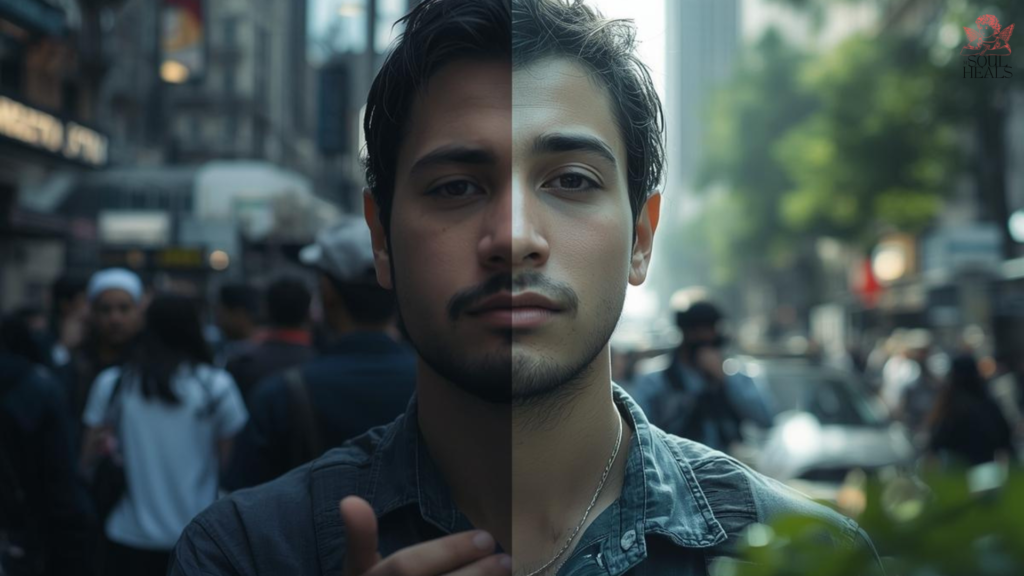
Emotional Detachment vs. Spiritual Detachment: Understanding the Difference in a Hyper-Stressed American Society

Emotional Detachment vs. Spiritual Detachment: Understanding the Difference in a Hyper-Stressed American Society

Emotional vs. Spiritual Detachment
🪷

Emotional vs. Spiritual Detachment

Understanding the difference in a hyper-stressed American society

In America’s relentless culture of productivity, achievement, and constant stimulation, “detachment” has become a survival strategy. Spiritual teachers advocate non-attachment. Therapists warn against emotional avoidance. The wellness industry sells both as the same thing. But they are profoundly different—and confusing them creates a spiritual bypassing crisis that leaves millions of Americans numb, disconnected, and calling it “enlightenment.”

The Critical Distinction: Spiritual detachment is presence without clinging—you feel everything fully but don’t grasp or identify with it. You’re deeply alive, deeply connected, yet free. Emotional detachment is dissociation from feeling—you’ve shut down to avoid pain, numbed yourself to survive stress, and mistaken numbness for peace. One is enlightened consciousness; the other is trauma response. One expands your capacity to love and feel; the other shrinks you into a protected shell. In a hyper-stressed society that traumatizes people daily, millions are practicing emotional shutdown and calling it spiritual growth. This quiz reveals which one you’re actually doing.

Modern America is living through one of the most emotionally intense eras in history. People are juggling career pressure, financial uncertainty, family expectations, digital overstimulation, and an overwhelming sense of urgency to keep up. As a result, emotional burnout is becoming a normal part of daily life. In the search for relief, many Americans are turning to concepts like detachment, but few understand that there is a major difference between emotional detachment and spiritual detachment.

These two states may sound similar, but they operate on completely different emotional and psychological frequencies. One disconnects you from life, while the other connects you more deeply to your inner wisdom.

“Detachment is not the art of caring less. It is the art of suffering less.”

Understanding this difference is essential for creating a healthier mindset, especially in a society where emotional overwhelm has become the new normal.

Why Americans Are Turning to Detachment for Survival

Everywhere you look, people are exhausted. Not just physically, but emotionally and mentally. Detachment, in various forms, has become a defense mechanism. Some people detach to avoid pain, while others detach to cultivate peace.

But the motive matters. And the motive shapes the outcome.

Emotional detachment often emerges from fear, stress, or unresolved trauma. Spiritual detachment grows from awareness, acceptance, and inner expansion.

The confusion between the two has left millions of people stuck in cycles of numbness instead of true healing.

Understanding Emotional Detachment

Emotional detachment is a psychological state characterized by disconnection from your feelings, from other people, or from emotionally charged situations. It can be temporary or long-term, voluntary or involuntary.

Many people think emotional detachment is healthy, but it usually represents a form of self-protection rather than self-evolution.

It is the mind closing the door to avoid further pain.

“Emotional detachment feels like safety, but it slowly turns life into a muted experience.”

In a hyper-stressed American lifestyle, emotional detachment has become extremely common because it offers short-term relief from intense emotional pressure. But the long-term costs are deep.

Signs of Emotional Detachment

People who are emotionally detached often experience:

They feel distant from their own emotions and struggle to identify how they feel. They avoid vulnerable conversations and find it hard to trust others. They may appear calm, but internally they feel shut down. They experience relationships on a surface level and keep people at arm’s length. They use logic to override emotional needs, often leading to suppressed anger, sadness, or anxiety.

While emotional detachment reduces emotional intensity, it also reduces emotional richness. It blocks both pain and joy.

Why Emotional Detachment Develops

Emotional detachment often emerges from:

  • Childhood emotional neglect
  • Toxic or abusive relationships
  • Overwhelming stress and burnout
  • Fear of rejection or abandonment
  • Trauma stored in the nervous system
  • Chronic social pressure or digital overwhelm

In America’s achievement-driven environment, detachment often becomes a survival strategy. People believe they must stay strong, productive, and unaffected, so they suppress their emotional responses to keep up.

But what begins as protection gradually becomes emotional numbness.

The Psychological Cost of Emotional Detachment

Emotional detachment is not harmless. It carries consequences that ripple into every part of life.

Relationships become strained because partners feel unseen or emotionally abandoned. Decision-making becomes difficult because intuition is muted. Creativity declines because emotions play a key role in imagination. Loneliness increases, even in the presence of others. The nervous system stays in a state of low-level tension, preventing deep relaxation.

Emotional detachment disconnects you from yourself before it disconnects you from the world.

Understanding Spiritual Detachment

Spiritual detachment, in contrast, is a conscious practice rooted in clarity and awareness. It arises not from fear, but from wisdom. It is the understanding that you can experience the world fully without becoming trapped by it.

Spiritual detachment does not numb emotions. It helps you relate to them with calmness and perspective.

It is not a shutdown; it is an opening.

“Spiritual detachment says: I feel everything, but nothing controls me.”

This is why great spiritual traditions – from Buddhism to Stoicism to modern mindfulness – emphasize the art of detachment. It is the path to inner freedom.

What Spiritual Detachment Really Means

Spiritual detachment is often misunderstood as apathy, but the truth is the opposite. It actually increases sensitivity, compassion, and presence. You become more aware of your emotions without drowning in them.

It teaches you to let life flow, rather than holding on tightly.

This form of detachment encourages you to stay connected to yourself, your values, and your peace, even when the external world is chaotic.

It is the difference between reacting and responding. Between attachment and acceptance. Between control and surrender.

Emotional Detachment vs. Spiritual Detachment: The Core Difference

Emotional Detachment vs. Spiritual Detachment: The Core Difference

The key difference lies in motivation and outcome.

Emotional detachment is reactive. It is your mind’s attempt to protect you by avoiding or suppressing uncomfortable emotions. It creates emotional distance and often leads to numbness.

Spiritual detachment is intentional. It allows you to feel emotions fully but respond from a place of clarity and inner stability.

Emotional detachment disconnects.
Spiritual detachment liberates.

This is the distinction most people miss. One is rooted in fear; the other is rooted in freedom.

How Emotional and Spiritual Detachment Feel Different

Emotionally detached people say:

“I don’t feel anything anymore.”
“I’m tired of caring.”
“I just want to block everything out.”

Spiritually detached people say:

“I observe my emotions without becoming them.”
“I can let go of what I cannot control.”
“I feel deeply, but I choose peace over chaos.”

These two states may look similar from a distance, but the internal experience is entirely different.

Why Emotional Detachment Cannot Lead to Peace

Many Americans mistakenly believe emotional detachment will bring inner peace. But suppressing emotions does not dissolve them. It stores them in the body, where they create tension, anxiety, and irritability.

Over time, emotional detachment:

  • Creates emotional unavailability
  • Triggers relationship breakdowns
  • Leads to passive aggression
  • Weakens emotional intelligence
  • Deepens unresolved trauma
  • Blocks authentic connection

Peace cannot grow in a place where emotions are buried.

Why Spiritual Detachment Leads to True Peace

Spiritual detachment brings peace because it does not fight emotions; it understands them. It allows emotions to flow like waves instead of pushing them away.

It helps you stay centered even during emotional storms. Instead of suppressing, you witness. Instead of clinging, you release.

Spiritual detachment helps you recognize that emotions are temporary, and so are circumstances. Nothing external has the power to disrupt your inner balance unless you give it that power.

“Peace comes not from avoiding life, but from meeting life with an open mind.”

The Role of Trauma in Emotional Detachment

Trauma is one of the biggest contributors to emotional detachment. The brain learns to shut down feelings as a protective mechanism. The problem is that the brain does not differentiate between danger and discomfort. Once it forms the habit of shutting down, it continues even in safe environments.

This is why so many people who experience emotional detachment do not understand why they feel numb. The shutdown happened long before they realized it.

Understanding this connection is essential for healing.

The Role of Awareness in Spiritual Detachment

Awareness is the foundation of spiritual detachment. When you observe your thoughts and emotions without judgment, you create space between yourself and your reactions. This space is where clarity and peace grow.

Awareness turns emotional storms into manageable experiences. It helps you understand that emotions are signals, not threats.

Spiritual detachment is impossible without awareness because awareness allows you to participate in life without being consumed by it.

How American Culture Encourages Emotional Detachment

The American lifestyle, with its fast pace and constant pressure, unintentionally pushes people toward emotional detachment. The culture values productivity over presence, strength over vulnerability, and independence over emotional connection.

People learn to suppress their feelings to stay functional. They believe emotional expression is a sign of weakness. They prioritize achievement even at the cost of emotional well-being.

In the long run, this cultural programming fosters emotional numbness instead of resilience.

How Spiritual Detachment Can Heal American Burnout

Spiritual detachment offers what emotional detachment never can: sustainable peace. It encourages rest, reflection, and inner alignment. It helps people redefine success, not through productivity but through emotional clarity.

Spiritual detachment teaches Americans to slow down, breathe, and reconnect with themselves. It provides a path to healing burnout, anxiety, and emotional overload by creating mental spaciousness.

It transforms the way people relate to stress and uncertainty.

Building Emotional Regulation Through Spiritual Detachment

Building Emotional Regulation Through Spiritual Detachment

Spiritual detachment enhances emotional regulation by helping you feel emotions without reacting impulsively. You learn to pause. You learn to reflect. You learn to choose.

In a country where emotional reactivity is common, spiritual detachment becomes a powerful tool for mental and emotional resilience. It strengthens self-awareness and reduces emotional volatility.

It allows you to move through life with grounded presence rather than survival-based instincts.

Why Emotional Detachment Feels Safe but Stunts Growth

Emotional detachment feels safe because it removes the intensity of emotional experiences, but it prevents growth. Without emotions, you cannot heal. Without healing, you cannot evolve.

It keeps you stuck in old patterns, unable to move into healthier emotional territory.

Growth requires vulnerability, and vulnerability requires connection. Emotional detachment blocks both.

Spiritual detachment, however, supports growth by allowing you to feel emotions with courage and clarity.

How to Transform Emotional Detachment into Spiritual Detachment

Transformation begins with awareness.

You start by recognizing when you are shutting down emotionally. Then you begin practicing mindfulness and emotional honesty. You allow yourself to feel small emotions before tackling deeper ones.

You practice letting go without pushing away. You observe without suppressing.

Gradually, emotional detachment softens, and spiritual detachment emerges.

“Detachment shifts from avoidance to acceptance when awareness enters the room.”

Practices That Support Spiritual Detachment

These practices nurture emotional clarity and resilience. They help you experience emotions without being controlled by them.

Why Spiritual Detachment Strengthens Relationships

Unlike emotional detachment, spiritual detachment improves relationships. It makes you more present, compassionate, and aware. You communicate better because you no longer react automatically.

You understand other people’s emotions without taking them personally. You hold space without absorbing their pain. You become grounded, stable, and emotionally secure.

Spiritual detachment creates emotional maturity, which strengthens connection rather than weakening it.

The Future of Mental Wellness in America

As emotional burnout continues to rise, spiritual detachment will likely become an essential component of mental wellness. It aligns with the growing desire for mindfulness, authenticity, and emotional healing.

People are beginning to recognize that mental strength does not come from suppressing feelings but from understanding them.

The more society learns about spiritual detachment, the more emotionally intelligent and emotionally healthy America can become.

The Emotional Risks of Confusing the Two Types of Detachment

One of the biggest modern psychological challenges is that many people mistake emotional shutdown for spiritual maturity. The language of spirituality has become mainstream in America, but its practice is often misunderstood. People say they are “detached,” “unbothered,” or “protecting their peace,” yet what they really mean is that they are avoiding emotional discomfort.

This confusion is dangerous because emotional detachment disguised as spirituality prevents both healing and self-awareness. When avoidance is mistaken for wisdom, people stay stuck in emotional paralysis without realizing it.

Spiritual detachment empowers.

Emotional detachment escapes.

When the two are mixed up, individuals may believe they are evolving when in reality they are simply numbing themselves in more sophisticated ways.

How Social Media Culture Fuels Emotional Detachment

Social media plays a major role in how detachment is understood today. The culture of “no feelings,” “cutting people off,” and “staying unbothered” glamorizes emotional disconnection. Memes encourage people to detach quickly from relationships, suppress emotions, and pretend not to care.

While this may provide short-term empowerment, it creates long-term emotional instability. Humans are wired to feel, connect, and communicate. Suppressing these natural mechanisms leads to inner conflict.

Spiritual detachment, however, teaches the opposite. It encourages compassion, presence, and authenticity. It does not glorify emotional shutdown; it celebrates emotional clarity.

Why Emotional Detachment Creates Inner Conflict

Emotional detachment creates tension because it forces the mind and body to operate out of alignment. The mind may insist on “not caring,” but the body still holds fear, hurt, and sadness.

This inner conflict leads to:

  • Chronic irritability
  • Short-tempered reactions
  • Emotional exhaustion
  • Difficulty forming secure relationships
  • Overthinking and anxiety
  • Sudden emotional outbursts

When emotions are blocked, they do not disappear. They simply gather pressure beneath the surface until they erupt. Emotional detachment becomes a ticking psychological time bomb.

Spiritual detachment relieves this pressure by allowing emotions to pass through naturally.

Spiritual Detachment as a Path to Authenticity

Spiritual Detachment as a Path to Authenticity

Authenticity thrives when emotions are acknowledged rather than avoided. Spiritual detachment creates a safe internal environment for emotional truth. It allows you to be honest without being overwhelmed.

With spiritual detachment, you can say:

“I am hurting, but I am not defined by my hurt.”
“I am afraid, but I do not let fear make my decisions.”
“I care, but I do not cling.”

This level of emotional honesty is impossible in emotional detachment, where truth is buried under avoidance.

Authenticity emerges when you stop fighting your feelings and start understanding them.

“When You Stop Running From Yourself, Peace Stops Running From You”

Imagine a life where emotions do not overwhelm you. Imagine a life where you feel deeply without breaking. Imagine a life where peace is not something you chase but something you grow within.

Spiritual detachment invites this life. It teaches you that you are not your fears. You are not your pain. You are not your reactions. You are the watcher behind them. The awareness beneath them.

Emotional detachment is a wall.
Spiritual detachment is a window.

One blocks the world.
The other lets the light in.

The journey from emotional numbing to spiritual clarity is the journey of returning to yourself.

Scroll to Top