Walking the Path of Non-Attachment
How to Love Deeply Without Losing Yourself

We are drowning in attachment disguised as love. We call it devotion when it’s actually desperation. We call it commitment when it’s actually fear of being alone. We call it deep connection when it’s actually codependency. We cling to people, outcomes, identities, stories, and then wonder why our love feels heavy instead of free, why relationships feel suffocating instead of spacious, why we keep losing ourselves in others and calling it romance. Modern Western culture has taught us that love means possession—”my person,” “my other half,” “I can’t live without you”—and that attachment equals depth. But the spiritual traditions know differently. Non-attachment is not the absence of love; it’s love’s highest expression. It’s the capacity to love someone completely while holding them with an open hand. To care deeply without needing to control. To be fully present without demanding permanence. To give yourself fully while remaining whole.
The Liberation Paradox: Non-attachment doesn’t mean you don’t care—it means you care so much that you’re willing to let people be who they are, leave if they need to, change without your permission, disappoint you, choose differently than you’d hoped, and even die, all while continuing to love them. It’s the practice of releasing your grip without releasing your heart. Of staying engaged without being enslaved. Of investing without being attached to return. The Buddha taught it. The Bhagavad Gita explores it. Every mystical tradition points to it: suffering comes from attachment, not from love. The problem? We’ve been conditioned to believe that if you’re not clinging, you’re not loving. That non-attachment is cold, distant, unfeeling. But it’s actually the opposite—only when you release attachment can you truly love without agenda, manipulation, or fear. This quiz reveals where you are on the path: Are you loving with an open hand or a clenched fist? Have you dissolved the confusion between attachment and love? Can you be deeply intimate while remaining sovereign? Or are you still losing yourself in relationships and calling it devotion?
Love is often portrayed as all-consuming, a force that pulls us so deeply into another person that our own sense of self can fade away. Yet, true intimacy doesn’t require losing yourself – it thrives when both individuals retain their own identities while sharing a deep, authentic connection. This is the essence of non-attachment: the ability to love fully, passionately, and genuinely, without clinging, controlling, or depending entirely on the other person for your happiness.
Non-attachment is not about becoming distant or indifferent; rather, it’s about cultivating emotional freedom. It allows us to experience love with clarity, compassion, and presence, while remaining grounded in our own values, needs, and personal growth. By embracing this path, we can navigate relationships with grace, reduce unnecessary suffering, and foster bonds that are supportive and resilient.
In this blog, we will explore the principles of non-attachment in love, the difference between attachment and healthy connection, and practical ways to nurture deep relationships without sacrificing your own sense of self. Whether you are seeking romantic love, friendships, or familial bonds, understanding and practicing non-attachment can help you love more authentically – and experience the profound joy of connection without losing yourself.
Understanding Non-Attachment: Love Without Clinging
Non-attachment is often misunderstood as coldness, indifference, or emotional detachment. In reality, it is a profound approach to relationships that allows us to love deeply while maintaining our sense of self. It is the ability to care, support, and connect without clinging, controlling, or losing oneself in the other person.
What Non-Attachment Really Means
- Freedom within connection: Non-attachment allows both partners to thrive individually while sharing a relationship.
- Emotional balance: You remain centered, avoiding extreme dependence or over-investment in another person’s emotions.
- Acceptance over control: Non-attachment teaches us to accept people as they are, without trying to mold or change them.
The Difference Between Attachment and Non-Attachment
- Attachment:
- Feeling incomplete without the other person.
- Seeking constant validation and reassurance.
- Experiencing fear, jealousy, or anxiety when apart.
- Non-Attachment:
- Feeling whole within yourself, regardless of external circumstances.
- Appreciating the relationship without needing it to define your worth.
- Embracing uncertainty with trust and emotional resilience.
Why Non-Attachment Enhances Love
- Creates emotional space: Both partners feel free to grow, explore, and express themselves authentically.
- Reduces conflict: When there is no need to control or cling, misunderstandings are less likely to escalate.
- Promotes mutual respect: Each person’s individuality is honored, fostering deeper admiration and connection.
Practical Ways to Practice Non-Attachment
- Self-awareness: Regularly check in with your emotions. Are you acting out of fear, need, or love?
- Mindful communication: Speak openly but without expecting specific outcomes or reactions.
- Embrace impermanence: Recognize that change is natural; relationships evolve, and so do people.
- Focus on self-growth: Pursue personal passions, hobbies, and goals outside the relationship.
Key Takeaways
- Non-attachment is not about avoiding love; it is about loving consciously and freely.
- Clinging arises from fear, neediness, or insecurity, while non-attachment comes from self-understanding and inner stability.
- Practicing non-attachment nurtures relationships that are fulfilling, supportive, and sustainable.
In essence, non-attachment allows you to love fully without losing yourself. It transforms love from a source of anxiety and dependency into a space of freedom, respect, and deep connection. By cultivating this mindset, you can experience relationships with clarity, presence, and genuine joy.
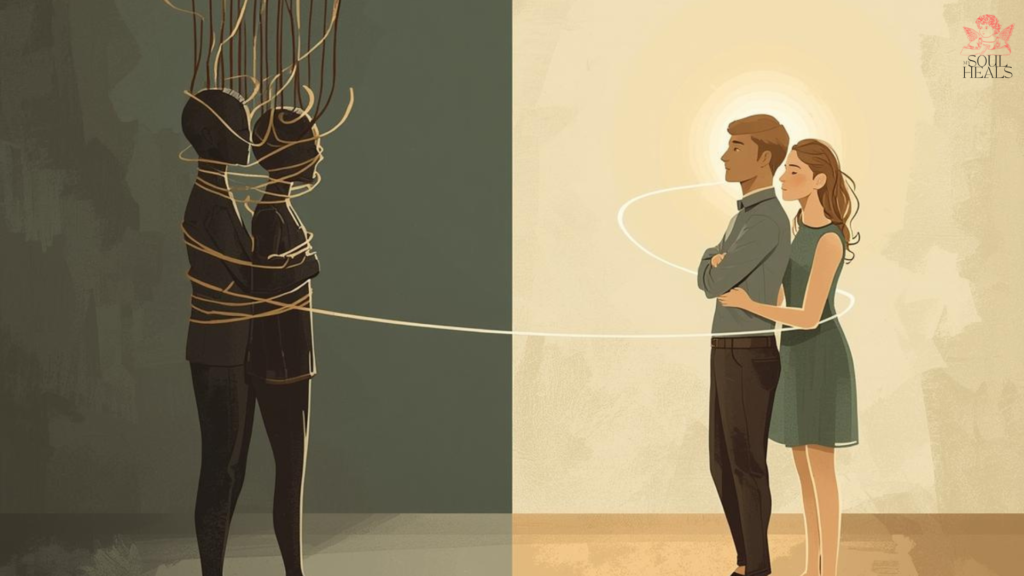
The Difference Between Attachment and Healthy Connection
In relationships, attachment and healthy connection are often confused. While both involve emotional bonds, the quality, depth, and impact on personal growth are vastly different. Understanding this difference is crucial for cultivating love that nourishes both partners without eroding individual identity.
What Attachment Looks Like
Attachment often stems from fear – fear of being alone, rejected, or unloved. It can create patterns of dependency that strain a relationship. Common signs include:
- Clinging behavior: Constant need for attention, reassurance, or approval.
- Emotional dependency: Feeling incomplete or anxious when the partner is absent.
- Control and possessiveness: Attempting to influence the partner’s choices, friendships, or actions.
- Fear of loss: Intense anxiety about potential breakups or changes in the relationship.
Attachment can create temporary comfort but often leads to stress, resentment, and emotional turbulence.
What Healthy Connection Looks Like
Healthy connection, on the other hand, is rooted in love, trust, and mutual respect rather than fear or neediness. Its key characteristics include:
- Autonomy and individuality: Both partners maintain their sense of self, hobbies, and goals.
- Mutual support: Each person encourages growth and celebrates the other’s successes.
- Open communication: Honest conversations occur without expectation or judgment.
- Emotional resilience: Conflicts are addressed calmly, with understanding rather than control.
Key Differences in Perspective
| Aspect | Attachment | Healthy Connection |
| Motivation | Fear of loss or loneliness | Desire for shared growth and joy |
| Dependency | High, often anxious | Low, balanced with personal independence |
| Emotional response | Jealousy, insecurity, clinging | Trust, acceptance, and calm |
| Focus | Self-centered (security, validation) | Relationship-centered (growth, understanding) |
Why Understanding This Difference Matters
- Prevents burnout: Attachment can drain emotional energy, while healthy connection sustains it.
- Supports personal growth: Healthy connection encourages self-expression and exploration.
- Strengthens intimacy: Paradoxically, loving without clinging deepens closeness and trust.
How to Cultivate Healthy Connection
- Self-awareness: Reflect on whether your behaviors come from love or fear.
- Boundaries: Clearly define emotional and personal boundaries without guilt.
- Encourage independence: Support your partner’s interests and spend time nurturing your own.
- Practice gratitude: Focus on appreciating your partner’s presence without needing control.
Attachment binds relationships with fear, while healthy connection bonds them with love. By recognizing these differences, we can transform our relationships into spaces where both partners thrive, emotionally and spiritually. Healthy connection allows love to flourish naturally – free from suffocation, insecurity, or unnecessary expectations.
Why Non-Attachment Strengthens Emotional Bonds
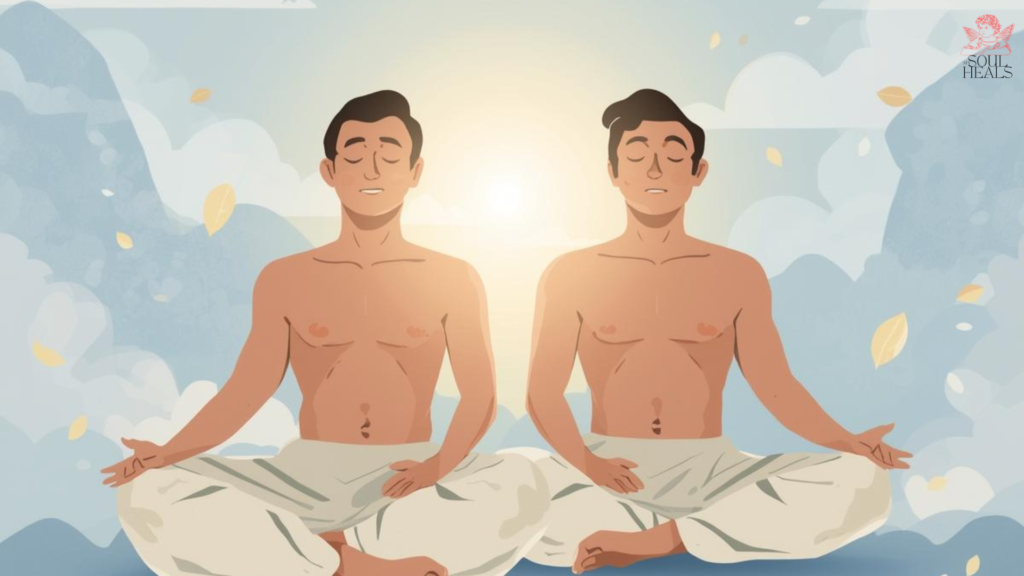
Non-attachment is often misunderstood as emotional distance, but in reality, it deepens relationships by fostering trust, respect, and genuine connection. When we love without clinging, we create space for both ourselves and our partners to thrive. This emotional freedom strengthens bonds in ways that attachment cannot.
Emotional Freedom: The Core of Non-Attachment
- Breathing space in love: Non-attachment allows each partner to grow individually while remaining connected.
- Reduces pressure: Without constant neediness, relationships are more relaxed and enjoyable.
- Encourages authentic expression: Each person can share thoughts and feelings honestly, without fear of judgment or rejection.
Building Trust Through Non-Attachment
- Acceptance of impermanence: Recognizing that relationships evolve helps reduce insecurity.
- Confidence in the bond: Trust grows when neither partner feels compelled to control or cling.
- Emotional stability: Non-attached individuals respond calmly in conflicts, reinforcing safety and reliability.
Enhancing Mutual Respect
- Honoring individuality: Both partners are free to pursue their own goals, hobbies, and friendships.
- Balanced interdependence: Love is shared without sacrificing self-identity or autonomy.
- Appreciation over possession: Respecting the partner’s freedom nurtures admiration and deeper connection.
Deepening Emotional Intimacy
- Presence over expectation: Focusing on the moment with your partner rather than anticipated outcomes strengthens intimacy.
- Listening with compassion: Non-attachment allows you to truly hear your partner, rather than reacting from fear or need.
- Empathy without entanglement: You can care deeply without absorbing the partner’s emotional burdens as your own.
Practical Ways to Strengthen Bonds Through Non-Attachment
- Mindful communication: Speak and listen consciously, free from judgment or hidden agendas.
- Celebrate individuality: Encourage your partner’s personal growth and maintain your own pursuits.
- Let go of control: Focus on mutual enjoyment and collaboration rather than outcomes.
- Practice gratitude: Appreciate your partner’s presence and actions without taking them for granted.
Key Takeaways
- Non-attachment transforms love from a source of anxiety into a space of trust and freedom.
- Emotional bonds are stronger when both individuals feel safe, respected, and supported.
- Loving without clinging cultivates lasting intimacy, resilience, and authenticity.
In essence, non-attachment is not about withdrawing love but about enhancing it. By embracing freedom, respect, and mindful presence, we create relationships where emotional bonds grow deeper and more meaningful. When love is free from fear and dependency, it becomes a source of joy, inspiration, and lasting connection.
Learning to Love Yourself First
Self-love is the foundation of any healthy relationship. Without it, love for others can easily become attachment, neediness, or dependency. Learning to love yourself first is not selfish – it is an essential step toward creating balanced, fulfilling, and authentic connections.
Understanding Self-Love
- Self-acceptance: Embracing your strengths and weaknesses without judgment.
- Emotional nourishment: Meeting your own needs for comfort, care, and validation before relying on others.
- Inner stability: Developing resilience to life’s challenges and emotional fluctuations.
Self-love is the anchor that prevents you from losing yourself in another person. It allows you to engage in relationships from a place of wholeness rather than incompleteness.
The Link Between Self-Love and Non-Attachment
- Reduces dependence: When you feel complete within, you no longer cling to others for validation.
- Promotes clarity: Self-aware individuals can distinguish between healthy love and unhealthy attachment.
- Encourages healthy boundaries: Loving yourself teaches you to protect your emotional and personal space.
Practical Steps to Cultivate Self-Love
- Practice mindfulness: Spend time observing your thoughts and feelings without criticism.
- Nurture your passions: Engage in activities that bring joy and personal growth.
- Affirm your worth: Use positive self-talk and affirmations to reinforce self-value.
- Set boundaries: Respect your own limits and communicate them clearly to others.
- Prioritize self-care: Ensure your physical, mental, and emotional needs are consistently met.
The Benefits of Loving Yourself First
- Stronger relationships: Partners feel more trusted and respected when you are emotionally independent.
- Enhanced communication: Self-aware individuals can express needs and desires without blame or manipulation.
- Emotional resilience: You can handle conflict or separation without losing balance.
- Authenticity in love: Loving yourself allows you to show up fully and authentically in any relationship.
Common Misconceptions About Self-Love
- It’s not selfish: Self-love is about maintaining wholeness, not prioritizing yourself at the expense of others.
- It’s not arrogance: Accepting your worth doesn’t mean diminishing the value of others.
- It’s a practice, not a destination: Self-love grows with consistent effort, reflection, and self-compassion.
Key Takeaways
- Loving yourself first is the cornerstone of non-attached love.
- Emotional independence creates space for healthier, more fulfilling connections.
- Self-love allows you to engage in relationships with clarity, presence, and genuine care.
Learning to love yourself first is not a detour from love – it is the path to loving others more deeply. By nurturing your inner world, setting boundaries, and embracing your unique worth, you build a solid foundation from which authentic, non-attached love can flourish.

Recognizing and Letting Go of Control in Relationships
Control is one of the most common barriers to authentic, non-attached love. When we attempt to manage our partner’s actions, emotions, or choices, we inadvertently create tension, dependency, and emotional strain. Recognizing these tendencies and learning to release them is essential for cultivating freedom, trust, and deeper connection in any relationship.
Understanding the Desire for Control
Control often arises from fear – fear of loss, fear of rejection, or fear of uncertainty. People may try to control their partner in subtle or overt ways, such as:
- Dictating decisions or choices to feel secure.
- Manipulating situations to ensure desired outcomes.
- Monitoring behaviors, friendships, or social interactions.
- Reacting with anxiety or anger when things don’t go as expected.
While these actions may feel protective in the short term, they undermine trust, create resentment, and block authentic emotional intimacy.
Signs You May Be Controlling
- Constant reassurance-seeking: Needing frequent validation or proof of commitment.
- Overstepping boundaries: Disregarding your partner’s autonomy or personal space.
- Rigid expectations: Insisting that things be done “your way” to feel secure.
- Emotional reactions tied to outcomes: Feeling overly anxious, upset, or disappointed when the partner doesn’t meet expectations.
Awareness of these patterns is the first step toward releasing control.
Why Letting Go Strengthens Relationships
- Builds trust: When control is released, both partners feel trusted and respected.
- Encourages independence: Freedom allows both individuals to pursue personal growth and self-expression.
- Reduces conflict: Tension and resentment decrease when expectations are balanced with acceptance.
- Fosters authenticity: Partners feel safe being themselves, strengthening emotional intimacy.
Practical Steps to Let Go of Control
- Acknowledge your fears: Identify what you are trying to control and why. Understanding the root cause is essential.
- Practice mindfulness: Observe your impulses without acting on them immediately. Pause before reacting.
- Set healthy boundaries: Communicate your needs without imposing them on your partner. Boundaries are about protection, not control.
- Focus on what you can influence: Accept that you cannot control your partner’s feelings or actions; focus on your responses instead.
- Trust the process: Relationships evolve naturally when both partners have space to grow. Trust that love can thrive without manipulation.
Embracing Non-Attachment in Control
Non-attachment involves loving without clinging and releasing the illusion that you must manage outcomes. By practicing non-attachment:
- You learn to let go of expectations and embrace the present moment.
- You cultivate emotional resilience, reducing anxiety over uncertainty.
- You create a safe, nurturing space where love can flourish freely.
Key Takeaways
- Control in relationships stems from fear and insecurity, not love.
- Recognizing controlling behaviors is the first step toward emotional freedom.
- Letting go of control strengthens trust, intimacy, and mutual respect.
- Non-attachment allows love to exist without manipulation, fear, or pressure.
Releasing control is not about becoming passive or indifferent – it is about creating freedom, trust, and authenticity. When we let go of the need to manage outcomes, relationships transform into spaces of mutual growth, joy, and emotional connection. Love becomes an empowering force, rather than a source of anxiety or dependence, allowing both partners to thrive individually and together.
Embracing Impermanence: Love in a Changing World
Change is the only constant in life, yet many of us struggle to accept it in relationships. People evolve, circumstances shift, and feelings can transform over time. Embracing impermanence is about recognizing that nothing is fixed, and learning to love fully without clinging to a static version of someone or something. This mindset allows relationships to grow naturally, rather than being constrained by fear, expectation, or rigidity.
Understanding Impermanence in Love
Love is often idealized as eternal and unchanging, but in reality, it flows like a river – sometimes calm, sometimes turbulent. Accepting impermanence means:
- Acknowledging change: People’s needs, desires, and personalities evolve over time.
- Releasing attachment to outcomes: We cannot control the course of relationships, only our actions and intentions.
- Seeing beauty in the present: Appreciating each moment for what it is, rather than clinging to the past or fearing the future.
When we accept the transient nature of life and love, we experience relationships more vividly and deeply. Every moment becomes meaningful precisely because it is fleeting.
How Fear of Change Fuels Attachment
Fear is often at the heart of attachment. We cling to our partners, ideas, or routines because we fear loss or uncertainty. Some common manifestations include:
- Holding on to unrealistic expectations about how things “should” be.
- Resisting growth in ourselves or our partners to preserve comfort.
- Feeling anxious, jealous, or insecure when confronted with inevitable change.
Recognizing these patterns is the first step toward breaking free from fear-driven attachment.
Practicing Love Amid Change
Embracing impermanence doesn’t mean detachment from emotions – it means loving with awareness and acceptance:
- Appreciate the present: Focus on shared experiences without worrying about the future.
- Support growth: Encourage your partner’s evolution and pursue your own personal development.
- Release judgment: Accept changes in behavior, goals, or perspectives without criticism.
- Stay flexible: Learn to adapt to new circumstances rather than resisting them.
Lessons from Impermanence
- Resilience: Accepting change builds emotional strength and reduces dependency.
- Deeper connection: Love grounded in presence and acceptance fosters trust and intimacy.
- Freedom: Letting go of rigid expectations liberates both partners, allowing authentic love to flourish.
Key Takeaways
Impermanence is not a threat – it is an opportunity. By embracing the ever-changing nature of life and love, we cultivate relationships that are more dynamic, resilient, and fulfilling. Letting go of rigid control, fear, and expectation allows love to breathe and expand.
In a changing world, non-attached love is both practical and profound. It encourages us to honor the moment, cherish our connections, and remain open to growth – both in ourselves and in those we care about. By learning to move with life’s currents rather than against them, we experience love that is not only deep but also liberating.
Practical Practices to Cultivate Non-Attached Love
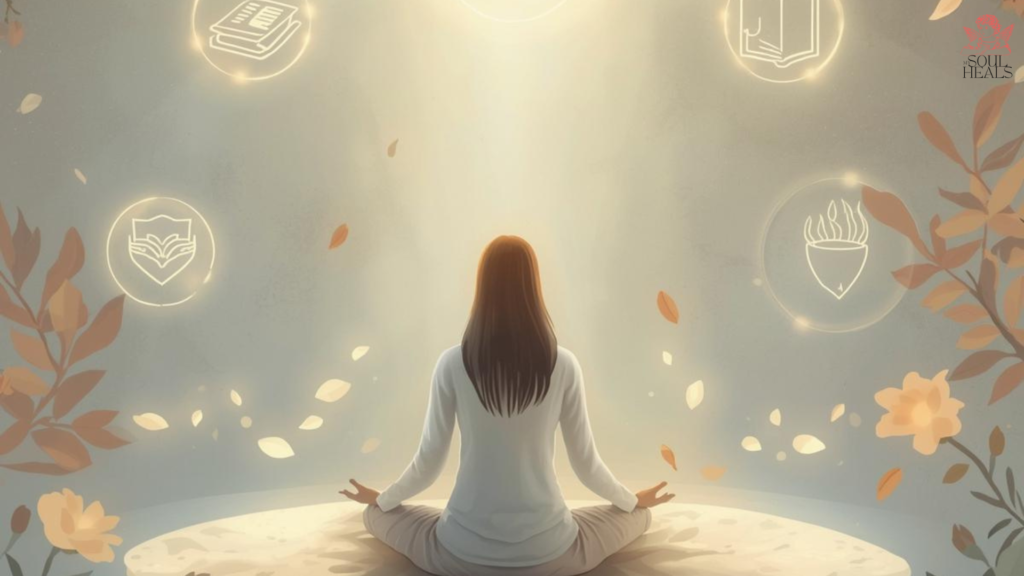
Non-attached love is a skill, a mindset, and a practice. It requires conscious effort and consistent reflection. While the concept can feel abstract, there are practical steps we can take to nurture love that is deep, freeing, and authentic. These practices help us remain connected to others while staying rooted in our own identity.
Mindful Awareness of Emotions
One of the first steps in cultivating non-attached love is developing mindfulness around your emotional responses. Observe your feelings without judgment. Are you acting from love, fear, or expectation? Mindfulness helps you pause before reacting impulsively and reduces the tendency to cling or control.
- Daily check-ins: Spend a few minutes each day reflecting on your emotional state.
- Observe triggers: Notice situations that provoke jealousy, insecurity, or over-dependence.
- Respond consciously: Instead of reacting, choose actions that align with presence and compassion.
Embracing Emotional Independence
Emotional independence is central to non-attached love. It means that your happiness and sense of self-worth are not dependent on another person. By cultivating your own sources of fulfillment, you reduce the urge to cling or seek constant reassurance.
- Pursue personal passions: Hobbies, learning, and creative pursuits build inner satisfaction.
- Self-soothing practices: Meditation, journaling, or spending time in nature can help you regulate emotions.
- Celebrate small wins: Recognize your achievements and strengths without relying on external validation.
Setting Healthy Boundaries
Boundaries are essential to protect your emotional space while maintaining closeness. Non-attached love doesn’t mean removing yourself from the relationship – it means clearly communicating limits with respect and empathy.
- Define your limits: Understand what is acceptable and what is not in terms of behavior, time, and energy.
- Communicate calmly: Express your boundaries without blame or aggression.
- Respect your partner’s boundaries: Healthy love requires mutual understanding and cooperation.
Practicing Letting Go
Non-attachment requires letting go of control, expectations, and fear. This does not mean indifference – it means allowing love to exist without rigid demands. Accept that people change, relationships evolve, and outcomes are not always predictable.
- Release outcomes: Focus on the present rather than worrying about the future.
- Accept imperfections: Understand that neither you nor your partner needs to be perfect.
- Trust the journey: Have faith in the natural flow of the relationship.
Cultivating Gratitude and Appreciation
Gratitude shifts the focus from what is missing or desired to what is present and valued. Appreciating your partner and your shared experiences strengthens the connection without breeding dependency.
- Daily appreciation: Reflect on qualities or actions you value in your partner.
- Celebrate together: Share moments of joy and accomplishment without expectation.
- Practice self-gratitude: Recognize your own growth and contributions to the relationship.
Continuous Self-Reflection
Non-attached love is not a destination but an ongoing journey. Regular self-reflection helps maintain balance and awareness.
- Journal your experiences: Record emotional patterns, challenges, and growth.
- Meditate on relationships: Contemplate your role in the dynamic and areas for improvement.
- Seek feedback mindfully: Listen to your partner’s perspective with openness, not defensiveness.
Balancing Passion and Personal Freedom
Love is often described in extremes – either as an all-consuming passion or as calm companionship. Yet, the most fulfilling relationships strike a balance between passionate connection and personal freedom. Maintaining this equilibrium allows partners to experience intimacy without losing themselves, cultivating a love that is both exhilarating and sustainable.
Understanding the Dynamic
Passion fuels excitement, attraction, and deep emotional connection. It is the spark that draws two people together. Personal freedom, on the other hand, ensures individuality, growth, and emotional independence. Without freedom, passion can become suffocating, leading to attachment, jealousy, or codependency. Conversely, without passion, freedom can feel isolating or emotionally distant.
Achieving balance means honoring both dimensions: embracing the intensity of connection while preserving your sense of self.
Signs of Imbalance
- Over-attachment: You prioritize the relationship above personal growth or well-being.
- Excessive independence: You avoid intimacy or emotional vulnerability to protect personal space.
- Jealousy or possessiveness: Passion is overshadowed by fear of losing control.
- Emotional burnout: Constantly oscillating between intense closeness and withdrawal.
Recognizing these patterns is the first step toward restoring harmony.
Cultivating Passion Without Losing Yourself
Passion thrives when each partner brings their full self into the relationship. To maintain this while respecting individuality:
- Pursue personal interests: Engage in hobbies, career goals, and friendships outside the relationship.
- Share experiences intentionally: Plan adventures, meaningful conversations, or creative activities that ignite connection.
- Express emotions openly: Allow yourself to feel desire, admiration, and love without fear of judgment.
By embracing personal passions, you not only maintain your identity but also bring vitality and depth to the relationship.
Nurturing Personal Freedom Within Intimacy
Personal freedom is not isolation – it is the ability to make choices, pursue dreams, and nurture individuality without guilt. Some practical steps include:
- Set clear boundaries: Communicate needs and limits respectfully.
- Encourage mutual growth: Support your partner’s goals and maintain your own.
- Allow space for reflection: Solitude can enhance clarity, creativity, and emotional balance.
Freedom strengthens passion because it removes fear, dependence, and control. Partners feel trusted and respected, which deepens emotional intimacy.
Communication: The Key to Balance
Open and honest communication is essential to balancing passion and freedom. Sharing desires, expectations, and concerns prevents misunderstandings and resentment.
- Discuss needs regularly: Check in on emotional, physical, and personal needs.
- Express appreciation: Recognize the efforts each partner makes to honor both connection and individuality.
- Negotiate conflicts calmly: Approach disagreements with curiosity and empathy rather than control.
Effective communication ensures that both passion and freedom are nurtured simultaneously.
The Role of Mindfulness
Mindfulness enhances awareness of both your needs and your partner’s. By staying present, you can enjoy moments of closeness fully without losing perspective or attachment. Practices include:
- Mindful touch and connection: Be fully present during intimate moments.
- Reflective pauses: Take time to notice your emotional state before reacting.
- Gratitude practice: Acknowledge the joys and lessons within the relationship.
Mindfulness keeps passion vibrant while preventing the suffocation that attachment can cause.
Takeaways
- Passion and personal freedom are not mutually exclusive – they are complementary.
- Balanced relationships foster excitement, intimacy, and individuality simultaneously.
- Pursuing personal growth and shared experiences strengthens connection and emotional resilience.
- Clear communication, mindfulness, and mutual respect are essential for sustaining this equilibrium.
In essence, balancing passion and personal freedom transforms relationships into dynamic, fulfilling spaces where love thrives without restriction. Partners can experience deep connection, excitement, and intimacy while remaining true to themselves. This balance cultivates a love that is liberating, enduring, and profoundly satisfying – where both the spark and the self can coexist harmoniously.

The Role of Mindfulness in Loving Without Losing Yourself
Mindfulness is the practice of being fully present and aware in each moment, observing thoughts, feelings, and sensations without judgment. In the context of relationships, it allows us to engage deeply with our partners while maintaining clarity and self-awareness. By cultivating mindfulness, we can love without attachment, avoiding the pitfalls of dependency, control, or emotional overinvestment.
Cultivating Awareness of Your Emotions
One of the most powerful aspects of mindfulness is its ability to create space between stimulus and response. Instead of reacting impulsively to a partner’s words or actions, mindfulness allows you to notice your emotions and examine their source. For example, feelings of jealousy or insecurity can be recognized as arising from fear rather than truth. By observing these emotions without judgment, you can respond with compassion and balance, rather than acting out of attachment.
Staying Present in Intimate Moments
Mindfulness encourages full presence in interactions with your partner. Whether it’s a conversation, shared activity, or physical intimacy, being fully engaged strengthens connection while reducing the tendency to cling or overthink. When you focus on the present moment, you appreciate your partner for who they are now, rather than projecting expectations from the past or future. This fosters authenticity in love, allowing both partners to feel valued and understood.
Observing Without Absorbing
A key benefit of mindfulness in relationships is learning to observe your partner’s emotions without internalizing them. Empathy is vital, but absorbing their emotional state as your own can lead to co-dependence and emotional exhaustion. Mindfulness helps maintain healthy boundaries: you can care deeply and respond thoughtfully, while still preserving your emotional equilibrium. Practices like mindful breathing or brief pauses during tense moments can help create this necessary separation.
Mindful Communication
Communication is at the heart of any relationship, and mindfulness enhances its quality. When you speak and listen consciously, interactions are guided by clarity, patience, and empathy. Mindful communication involves:
- Listening attentively without planning a response while the other speaks.
- Pausing before reacting to ensure your words reflect understanding rather than impulse.
- Expressing thoughts and emotions clearly, without blame or judgment.
This approach fosters mutual respect and allows each partner to feel heard without fear of manipulation or attachment-driven responses.
Integrating Mindfulness into Daily Life
Mindfulness is not limited to formal meditation – it can be woven into everyday interactions. Simple practices such as taking a few deep breaths before responding to conflict, dedicating undistracted time to a partner, or reflecting on your emotional state daily can significantly enhance relational awareness. By consistently practicing mindfulness, you cultivate a habit of self-awareness and presence, which naturally supports non-attached love.
Encouraging Mutual Mindfulness
Mindfulness is most effective when both partners embrace it. Sharing practices such as meditation, reflective conversations, or intentional presence strengthens the bond while fostering individual growth. It helps couples navigate challenges, embrace change, and experience deeper intimacy without dependency. Mutual mindfulness encourages an environment where love is nourishing, balanced, and liberating for both individuals.
Non-Attachment as a Path to Deeper, Authentic Connection
Non-attachment in relationships is often misunderstood as distance or indifference, but it is quite the opposite. It is the ability to love fully and deeply while remaining grounded in your own identity and emotional well-being. When we release the need to control, cling, or depend entirely on our partner for happiness, we create space for genuine connection to flourish.
By embracing non-attachment, we allow ourselves and our partners to evolve naturally. People change, circumstances shift, and emotions fluctuate. Attempting to hold onto a static version of someone can create tension, frustration, and dependency. Non-attachment teaches us to honor these changes without fear, expectation, or resentment. It allows us to appreciate our partner as they are, rather than as we wish them to be.
Non-attached love fosters mutual respect and trust. Partners feel safe expressing themselves, knowing they are valued for their true selves. Emotional intimacy deepens when love is free from pressure or obligation. This kind of connection encourages vulnerability without losing autonomy, creating a bond that is both liberating and enduring.
Practices such as mindful presence, healthy boundaries, and self-awareness strengthen non-attached love. By observing our emotions, communicating openly, and maintaining our individuality, we cultivate relationships that are resilient and meaningful.
In essence, non-attachment transforms love from a source of anxiety and dependency into a space of freedom and authenticity. It allows relationships to thrive not because we control them, but because we engage fully, consciously, and compassionately. When we love without clinging, we experience connection that is profound, balanced, and truly enduring.
Walking the Path of Conscious Love
Loving without losing yourself is not a destination – it is a journey, a continuous practice of awareness, presence, and self-respect. Non-attachment invites us to embrace love in its most authentic form, where passion and freedom coexist, and connection is nurtured without fear or control. It teaches us that true intimacy grows when we honor both our individuality and the shared bond we create with another.
In this path, relationships become mirrors for self-discovery, compassion, and growth. We learn to celebrate our partner’s uniqueness while remaining anchored in our own identity. Moments of joy are savored fully, conflicts are approached with clarity and patience, and challenges are met with resilience rather than anxiety.
Consciously loving in this way transforms ordinary interactions into meaningful experiences. Each gesture, conversation, and shared silence carries depth because it is free from expectation and attachment. By walking the path of non-attachment, we cultivate a love that uplifts, empowers, and endures – a love that is at once deeply intimate and profoundly liberating. In the end, the journey of loving consciously is the journey of loving fully – both others and ourselves.

✦ Related Articles You May Love
- Heart Chakra Healing For Self Love
- Aromatherapy Blends For Chakra Energy Healing
- The Power Of Silence How To Reclaim Stillness In A Noisy Overstimulated World
- Book List For Divine Feminine Awakening
- Interviews With Past Life Regression Authors
- Recommended Books For Emotional Detox
- Memoirs Of Spiritual Rebirth Journeys
- Books On Healing Mother Wound Trauma
- Poetry Based Meditation Reading
- Chakra Energy Habits For Daily Life
- Inner Alignment With Chakra Affirmations
- Signs Your Sacral Chakra Is Over Nurturing
- Crown Chakra Healing For Spiritual Downloads
- Relationship Wounds And Heart Chakra Blocks
- Understanding Past Life Chakra Imprints
- Chakra Breath Cycles For Inner Peace
- Healing Music Frequencies For Each Chakra
- Foods That Support Each Chakra
- Chakra Journaling For Emotional Clarity
- Spiritual Awakening Memoirs That Inspire Change
- How Soulful Storytelling Supports Emotional Resilience
- Readers Journey Transformation Through Spiritual Fiction
- Mystical Poetry That Evokes Healing And Hope 2
- Mystical Poetry That Evokes Healing And Hope
- Reflective Prompts From Sacred Indigenous Texts
- Soulful Bedtime Stories To Ease Worry 2
- Soulful Bedtime Stories To Ease Worry
- Journaling Prompts For Intuitive Dream Recall
- Interview With Energy Healer On Ancestral Healing
- Book List Gentle Spiritual Reads For Beginners
- Gratitude And Energy Expansion Guided Meditation
- Journey For Forgiveness And Self Compassion
- Nighttime Guided Cleansing For Busy Minds
- Sound Journey With Binaural Beats For Chakra Flow
- Inner Child Healing Guided Journey Script
- Guided Walk Meditation For Mindful Mornings
- Visualization Journey To Meet Your Spirit Animal
- Herbal Tea Rituals For Chakra Balance
- Healing Altar Ideas For Small Apartments
- Tapping Eft On Solar Plexus To Reduce Stress
- Visualisation With Colours For Anxiety Relief
- Simple Self Reiki Sequence After A Busy Day
- Ritual Bath Before Bed For Cleansing
- Yoga For The Sacral Chakra After A Creative Block
- Mystical Poetry That Ignites Spiritual Healing Readings
- True Soul Stories Of Transformation Through Meditation
- Yoga Flows To Balance The Throat And The Third Eye
- Crystal Suggestions For Heart Chakra Compassion
- Sound Healing At Home With Singing Bowls
- Aromatherapy Blends For Sacral Chakra Opening