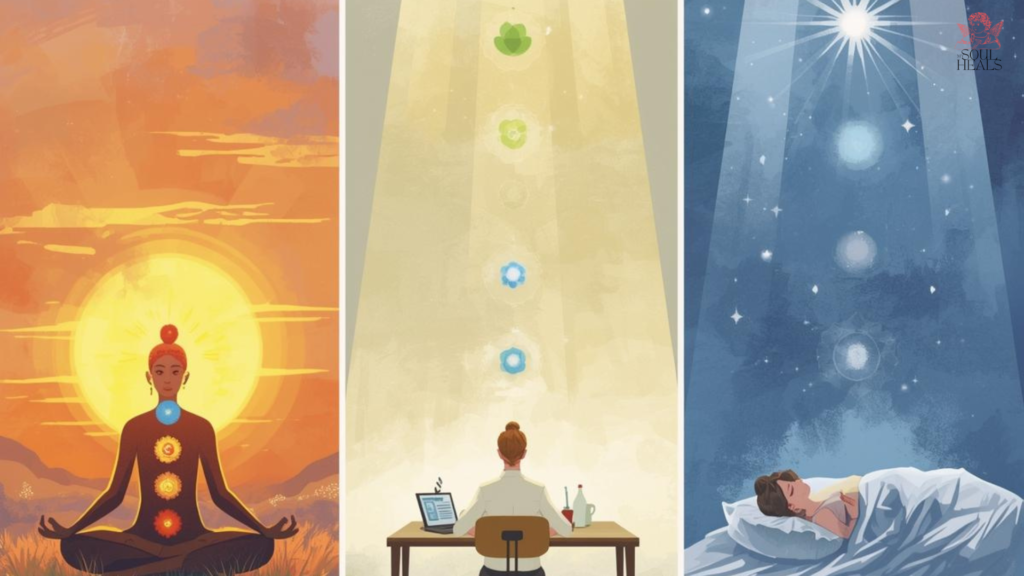
Most of us don’t wake up thinking about chakras. We wake up thinking about alarms, deadlines, family responsibilities, and unfinished to-do lists. Yet somewhere between rushing through the morning and collapsing into bed at night, our energy quietly gets scattered. A daily chakra alignment routine isn’t about doing something mystical or complicated – it’s about learning how to pause, check in with yourself, and gently reset your inner balance throughout the day.
Chakras are energy centres that influence how we feel emotionally, mentally, and physically. When they’re balanced, life tends to feel a little smoother – you’re more grounded in the morning, calmer during work hours, and more relaxed at night. When they’re off, you might notice restlessness, overthinking, irritability, or exhaustion without a clear reason. Research in mindfulness and mind-body practices shows that simple breathing, awareness, and intention can significantly reduce stress and improve emotional regulation.
This routine is designed to feel supportive, not overwhelming. You don’t need special tools, long meditation sessions, or prior knowledge. Each part of the day – morning, work, and sleep – comes with simple, practical steps you can actually follow. Think of this as a gentle guide walking beside you, helping you reconnect with yourself, one small moment at a time.
What Chakras Really Are
Let’s start by clearing a very common misunderstanding: chakras are not something you have to “believe” in for them to affect you. Just like stress affects your body whether you understand cortisol or not, chakras describe how energy, emotions, and awareness move through you – something every human experiences daily.
At their core, chakras are energy centres in the body. There are seven main ones, starting from the base of the spine and moving upward to the top of the head. Each morning chakra routine is connected to certain emotions, physical sensations, and patterns of behaviour. Think of them less as mystical wheels and more like emotional and energetic checkpoints. When energy flows smoothly through these checkpoints, you feel balanced. When it doesn’t, something feels “off” – even if you can’t put it into words.
From a practical perspective, chakras closely relate to the nervous system and endocrine system. For example, when you feel unsafe or anxious, your body reacts instantly – tight stomach, shallow breath, tense legs. That experience aligns with what’s called the root chakra, which governs safety and survival. When you’re confident and decisive, you feel it in your belly – that’s linked to the solar plexus chakra. These aren’t coincidences; they are lived, felt experiences.
Chakras also explain why emotional stress often shows up physically. Unspoken feelings can tighten the throat. Heartbreak can literally ache in the chest. Overthinking can create pressure behind the eyes. Modern research into psychosomatic health and mind-body connection supports this idea: emotions stored in the body influence posture, breathing, digestion, and immunity. Chakras give us a language to understand these patterns without medical jargon.
Another important thing to understand is that chakras are dynamic, not fixed. They don’t stay “blocked” forever, nor do they need constant fixing. Your chakras respond to your daily life – conversations, thoughts, stress levels, sleep, and even how you speak to yourself. A tough meeting can tighten your solar plexus. A heartfelt conversation can soften your heart chakra. A few minutes of silence can calm an overactive mind.
Chakras also act like emotional messengers. Instead of ignoring discomfort, chakra awareness invites curiosity. If your throat feels tight, you might ask, “What am I holding back from saying?” If your chest feels heavy, you might reflect, “Where am I carrying emotional weight?” This kind of self-inquiry isn’t about judgment – it’s about understanding yourself better.
Most importantly, chakra work is not about becoming “perfect” or “always calm.” It’s about developing a relationship with yourself. Some days you’ll feel grounded and clear; other days you won’t. Chakras help you meet yourself where you are, without forcing change. Over time, this awareness builds emotional resilience, self-trust, and inner stability.
In simple terms, chakras are a map – not a rulebook. They help you notice where energy flows easily and where it needs gentle attention. When approached with kindness and consistency, chakra awareness becomes less about spirituality and more about living with greater presence, balance, and ease.
How Your Energy Changes from Morning to Night
If you pay close attention to yourself, you’ll notice that your energy doesn’t stay the same all day. It shifts naturally from morning to afternoon to night, influenced by your body clock, mental workload, emotional interactions, and even the kind of thoughts you carry. Understanding this daily energy rhythm is the foundation of practical chakra alignment at work – it allows you to work with your body instead of pushing against it.
In the morning, your energy is at its most raw and impressionable. When you wake up, your system is transitioning from rest to activity. This is when the lower chakras – especially the root chakra – are most active. Your body is asking simple questions: Am I safe? Am I ready to face the day? If mornings feel rushed or anxious, it often shows up as tension in the legs, lower back, or stomach. Grounding practices like slow breathing, stretching, or even standing barefoot for a moment help stabilize this early energy and create a sense of inner safety before the mind starts racing.
As the day moves into work hours, energy shifts upward. Your focus moves from survival to performance. The solar plexus chakra becomes dominant, supporting confidence, decision-making, and motivation. This is why stress at work often feels like a knot in the stomach or a tight chest. At the same time, the throat chakra comes into play as you communicate, explain, negotiate, or hold back words. When energy is balanced here, you feel clear and assertive. When it’s strained, you may feel drained, unheard, or mentally exhausted – even if you’ve been sitting all day.
By evening, your system begins to slow down naturally. Energy moves away from doing and achieving toward processing and releasing. The heart chakra becomes more noticeable as emotions surface – sometimes as reflection, sometimes as emotional heaviness. This is also when the third eye chakra can become overactive, leading to overthinking or replaying the day’s events. Without conscious wind-down habits, this mental energy spills into bedtime, making sleep difficult.
At night, the body seeks stillness. The crown chakra supports rest, surrender, and mental quiet. When energy hasn’t been released throughout the day, sleep may feel shallow or restless. Gentle rituals – dim lighting, slower breathing, and intentional silence – signal to the body that it’s safe to rest.
Recognising these shifts helps you align your actions with your energy, creating smoother days and deeper rest without force or struggle.
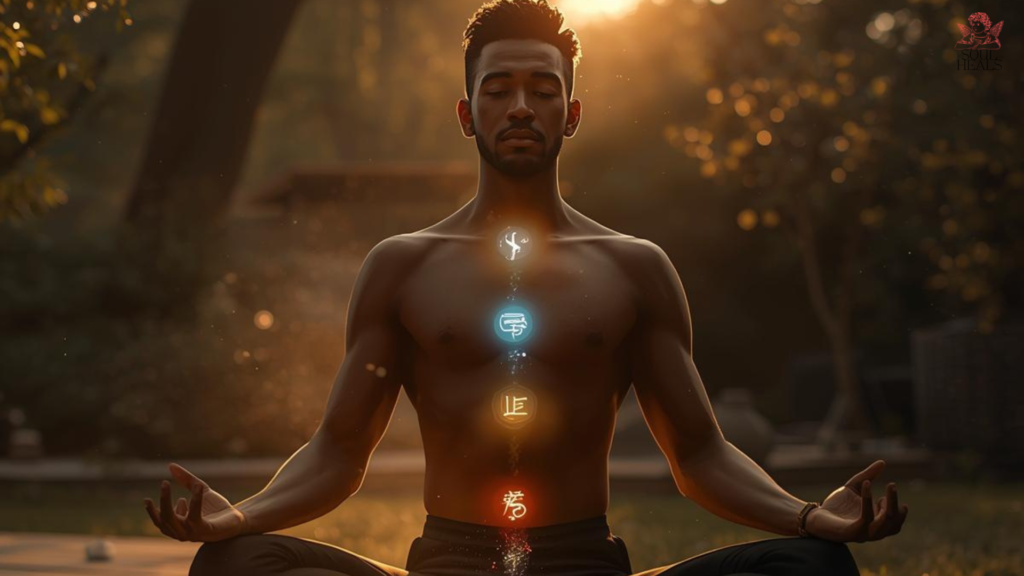
Morning Grounding: Waking Up the Body Before the Mind Takes Over
Mornings set the emotional tone for the entire day. Before emails, notifications, and responsibilities rush in, your body wakes up first – even before your thoughts fully form. If the mind takes over too quickly, stress and anxiety can become the default setting. Morning grounding is about anchoring yourself in the body so you begin the day feeling steady, present, and supported.
From an energy perspective, this is when the root chakra needs the most care. It governs safety, stability, and your sense of “I am okay right now.” When it’s ignored, mornings can feel rushed, foggy, or tense for no clear reason. Grounding doesn’t require yoga mats or meditation bells – it’s about conscious presence in simple actions you already do.
Before reaching for your phone, try giving your body a few moments of attention. Even two or three minutes can make a noticeable difference.
Simple morning grounding practices you can actually follow:
- Sit up in bed and place both feet on the floor, noticing the pressure and contact. This signals safety to your nervous system.
- Take 5 slow breaths into your lower belly, allowing it to expand as you inhale and soften as you exhale.
- Stretch gently, especially the legs, hips, and lower back – areas that hold survival stress.
- Place one hand on your lower abdomen and one on your chest, silently acknowledging, “I am here.”
- Move with intention, whether it’s brushing your teeth or making tea – stay aware of your body’s movement
These small acts wake up the body first, so the mind doesn’t run ahead of you. When you start grounded, the rest of the day feels less chaotic and more manageable – even when it’s busy.
A 5-Minute Root Chakra Practice You Can Do While Getting Ready
The chakra balance before sleep is all about safety, stability, and feeling supported in life. When it’s balanced, you feel calm, steady, and able to handle whatever the day brings. When it’s off, mornings can feel rushed, anxious, or unsettled – even if nothing is actually wrong. The good news is that grounding the root chakra doesn’t require sitting cross-legged or setting aside extra time. You can support it while getting ready, using movements and moments that already exist in your routine.
This 5-minute practice is designed to fit into real life – while brushing your teeth, choosing clothes, or waiting for your tea or coffee to brew. The focus is not perfection, but awareness and consistency.
Step 1: Ground Through Your Feet (1 minute)
Your feet are your body’s natural connection to the ground. When you bring attention here, the nervous system relaxes almost immediately.
- Place one hand on your lower belly
- Inhale through your nose, letting the belly rise
- Exhale slowly through the mouth, allowing the belly to soften
Repeat this for a few breaths while washing your face or brushing your teeth. This type of breathing tells your body that there is no immediate danger, calming survival-based tension.
Step 3: Conscious Movement While Getting Ready (1–2 minutes)
As you move through your morning routine, turn ordinary actions into grounding moments.
- When putting on clothes, notice the sensation of fabric on your skin
- Shift your weight gently from one foot to the other
- Roll your shoulders and release unnecessary tension
You don’t need to slow down dramatically – just be present. Presence itself is grounding.
Step 4: Body-Based Awareness Check-In (1 minute)
The root chakra communicates through physical sensations more than thoughts.
- Notice any tightness in your legs, hips, or lower back
- If you feel tension, gently stretch or shake it out
- Place a hand on your thighs or hips for a moment of reassurance
This step teaches the body that it’s okay to soften instead of bracing for the day.
Step 5: Set a Simple Grounding Intention (30 seconds)
Before stepping into your day, anchor yourself with one clear intention.
- “Today, I move at a steady pace.”
- “I trust myself to handle what comes.”
- “I am safe in this moment.”
Say it once, without forcing emotion. Consistency matters more than intensity.
Why This Practice Works (Without Overthinking It)
This routine works because it speaks the body’s language – breath, touch, movement, and repetition. Research in somatic awareness and nervous system regulation shows that grounding the lower body helps reduce anxiety and improves focus. The root chakra framework simply gives structure and meaning to these natural responses.
Signs Your Root Chakra Is Responding
Over time, you may notice:
- Less morning anxiety or rushing
- Better focus and decision-making
- A calmer response to stress
- Feeling more “settled” in your body
This practice isn’t about fixing yourself. It’s about starting your day from a place of stability, so your energy has somewhere solid to stand. Even five minutes, done regularly, can change how your entire day unfolds.

Building Confidence for the Day Through the Solar Plexus
Confidence isn’t something you switch on with positive thinking alone. It’s something you feel in your body – especially in the area between your ribs and your navel. This is where the solar plexus chakra lives, and it governs self-belief, personal power, motivation, and the ability to take action. When this centre is balanced, you naturally feel capable and decisive. When it’s low or overstimulated, confidence can slip into self-doubt, people-pleasing, or the need to control everything.
Most people unknowingly drain their solar plexus early in the day by rushing, skipping meals, or starting the morning with stress-heavy thoughts. The key is to gently activate this chakra without forcing motivation.
Think of the solar plexus like an inner flame. It doesn’t need pressure – it needs oxygen and care.
Understanding Solar Plexus Energy in Daily Life
From a body perspective, this chakra is closely linked to digestion, metabolism, and the stress response. Ever noticed how anxiety affects your stomach? That’s your solar plexus reacting. Research on the gut–brain connection shows that emotional states strongly influence digestion and energy levels. Supporting this chakra helps you feel mentally clear and physically energised at the same time.
A balanced solar plexus shows up as:
- Healthy confidence without arrogance
- The ability to say yes or no without guilt
- Steady motivation rather than burnout
- Trust in your own decisions
A Practical Solar Plexus Activation You Can Do in the Morning
You don’t need a long routine. These small actions fit easily between getting ready and leaving the house.
1. Power Posture (1 minute)
Your posture directly affects how confident you feel.
- Stand tall with feet hip-width apart
- Roll your shoulders back and lift your chest slightly
- Take 3 slow breaths, expanding the ribcage
This posture signals strength and self-assurance to your nervous system.
2. Gentle Core Engagement (1–2 minutes)
- Place one hand on your upper abdomen
- Inhale deeply, then gently engage your core as you exhale
- Repeat slowly without straining
This awakens inner strength without tension.
3. Morning Intention for Confidence
Choose one sentence that feels realistic:
- “I trust myself to handle today.”
- “I don’t need to prove anything.”
- “I show up as I am.”
Say it once or twice – no force, no hype.
Signs Your Solar Plexus Is Balanced During the Day
As the day unfolds, you may notice:
- Less second-guessing
- Clearer boundaries at work
- More focused energy
- A calmer response to pressure
Building confidence through the solar plexus isn’t about becoming fearless. It’s about feeling steady enough to act even when things feel uncertain. When this chakra is supported, confidence stops being something you chase – and becomes something you stand in.
Staying Emotionally Balanced at Work Without Meditation Breaks
Work is where emotional balance is tested the most. Deadlines, meetings, messages, expectations, and unspoken pressure can quietly drain your energy – even if you enjoy your job. The reality is that most people can’t step away to meditate during work hours, nor should emotional balance depend on perfect conditions. The good news is that staying emotionally steady at work has less to do with formal practices and more to do with how you move, breathe, respond, and pause within what you’re already doing.
Emotional balance at work mainly involves the solar plexus, heart, and throat chakras. Together, they support confidence, emotional regulation, and communication. When these centres are supported in small, practical ways, you feel less reactive and more grounded – even on busy days.
Understanding Emotional Triggers at Work
Workplace stress rarely comes from tasks alone. It often comes from feeling rushed, misunderstood, undervalued, or overwhelmed. These emotional triggers show up in the body first – tight chest, clenched jaw, shallow breathing, or a heavy stomach. Recognising these signals early helps you respond rather than react.
Instead of asking, “Why am I stressed?” try asking, “Where do I feel this in my body?” This simple shift creates emotional distance and prevents escalation.
Micro-Pauses That Reset Your Energy
You don’t need breaks – you need pauses. Micro-pauses are 10–30 second moments that calm your nervous system without interrupting your workflow.
While waiting for a file to load or switching tasks:
- Drop your shoulders
- Take one slow breath through the nose
- Exhale slightly longer than you inhale
This signals safety to your body and steadies emotional energy instantly.
Using Breath to Stay Centre-Aligned
Breathing is one of the fastest ways to stabilise emotions. At work, shallow breathing is common – and it fuels anxiety and irritability.
A practical technique:
- Inhale gently into the upper belly
- Exhale slowly while relaxing your jaw
This supports the solar plexus and reduces emotional reactivity without anyone noticing.
Emotional Boundaries Without Emotional Withdrawal
Many people confuse emotional balance with emotional shutdown. In reality, balance means engaging without absorbing everything.
When conversations feel intense:
- Keep both feet grounded on the floor
- Maintain a relaxed chest rather than crossing arms
- Breathe steadily while listening
This keeps the heart chakra open without being overwhelmed.
Communicating Without Draining Your Energy
Unspoken thoughts and forced politeness exhaust the throat chakra. Balanced communication isn’t about saying everything – it’s about saying what matters clearly.
Before speaking:
- Pause for one breath
- Speak slower than usual
- Keep your tone neutral and grounded
This preserves emotional energy and clarity.
Releasing Emotional Residue Between Tasks
Emotions linger when you move too quickly from one task to another.
Between tasks:
- Shake out your hands subtly
- Roll your shoulders once
- Take one grounding breath
These movements reset emotional build-up and prevent fatigue.
Ending the Workday Emotionally Clean
Before logging off:
- Sit still for 30 seconds
- Take one deep breath
- Acknowledge one thing you handled well
This closes the emotional loop and prevents work stress from carrying into your evening.
Why This Approach Works
Emotional balance at work isn’t about controlling feelings – it’s about regulating them through the body. Research in nervous system regulation shows that small, consistent physical cues reduce emotional overload more effectively than occasional long practices.
When you support your energy throughout the day, work becomes less draining and more manageable – without needing to step away from your responsibilities.

Simple Desk-Friendly Techniques to Reset Overactive Chakras
When work gets busy, chakras don’t usually become “blocked” – they become overactive. This shows up as racing thoughts, irritability, emotional overwhelm, restlessness, or feeling mentally switched on even when your body is tired. Overactivity is common at desks because the mind is constantly engaged while the body stays still. The goal here isn’t to shut energy down, but to gently bring it back into balance using subtle, desk-friendly techniques that don’t draw attention.
Overactive chakras most often at work include the third eye (overthinking), throat (mental pressure to respond or explain), and solar plexus (stress and control). These techniques help redirect excess energy downward and outward, calming the system naturally.
Grounding Excess Mental Energy Through the Body
When your thoughts are racing, trying to “calm the mind” rarely works. The body needs to be involved.
- Press both feet firmly into the floor
- Notice the pressure in your heels and toes
- Shift your attention from your head to your legs
This pulls energy out of the upper chakras and back into the body, creating immediate mental relief.
Soften the Jaw to Calm the Throat Chakra
A tight jaw is a sign of suppressed communication or mental tension.
- Gently unclench your teeth
- Let your tongue rest on the floor of your mouth
- Exhale slowly while relaxing the face
This simple release reduces internal pressure and helps communication feel easier.
Eye Reset for an Overactive Third Eye
Screens overstimulate the third eye chakra, leading to headaches and mental fatigue.
Every 30–60 minutes:
- Look away from your screen
- Focus on a distant object for 10 seconds
- Blink slowly a few times
This reduces mental strain and restores clarity.
Palm Pressure for Emotional Regulation
Your hands are powerful grounding tools.
- Place your palms flat on your thighs or desk
- Press gently for a few seconds
- Release and repeat
This grounds excess emotional energy and brings a sense of stability.
Shoulder Drop to Release Control Tension
Overactivity in the solar plexus often shows up as lifted shoulders.
- Inhale and lift shoulders slightly
- Exhale and drop them fully
- Repeat once or twice
This resets stress-driven energy and relaxes the body instantly.
One-Breath Reset Between Tasks
Before switching tasks:
- Take one slow breath
- Exhale longer than you inhale
- Let the body soften
This prevents emotional carryover and mental overload.
Why These Techniques Work
These methods work because they redirect energy, rather than suppress it. Research in somatic regulation shows that small physical cues calm the nervous system more effectively than mental effort alone.
When practised consistently, these techniques help you stay focused, calm, and emotionally steady – right at your desk, without disrupting your workday.
Releasing Mental Noise and Eye Strain with Third Eye Awareness
By the end of the day, many people don’t feel physically tired as much as mentally noisy. Thoughts keep looping, eyes feel heavy or dry, and even when the body wants to rest, the mind refuses to slow down. This constant mental stimulation is one of the clearest signs of an overactive third eye chakra. Understanding how to work with this energy – gently and practically – can bring noticeable relief without needing intense focus or long practices.
The third eye chakra sits in the centre of the forehead, between the eyebrows. It governs perception, mental clarity, focus, and intuition. In modern life, this chakra is overstimulated daily through screens, multitasking, problem-solving, and constant information intake. When balanced, the third eye supports clear thinking and insight. When overactive, it leads to overthinking, headaches, eye strain, mental fatigue, and difficulty switching off.
How Mental Noise Builds Up During the Day
Mental noise doesn’t appear suddenly – it accumulates. Each email, notification, decision, and unresolved thought adds a layer of stimulation. Over time, the mind stops processing and starts looping. You might replay conversations, worry about tomorrow, or feel pressure behind the eyes. This isn’t a personal failure – it’s a nervous system response to overload.
From a research perspective, studies on cognitive fatigue show that prolonged screen exposure and mental effort strain both attention and vision. The third eye chakra framework gives language to this experience, helping you address not just eye strain, but the mental pressure behind it.
Why Eye Strain Is Not Just About the Eyes
Eye strain is often treated as a physical issue, but it’s closely tied to mental focus. When you concentrate intensely, you unknowingly tense the muscles around the eyes and forehead. This tightness signals the brain to stay alert – even when you want to relax.
Third eye awareness works by softening attention rather than sharpening it. Instead of focusing harder, you allow the mind to widen and relax.
A Simple Third Eye Release Practice You Can Do Anywhere
This practice takes 2–3 minutes and can be done seated or lying down.
- Close your eyes gently, without squeezing
- Notice the space behind your eyes, not the eyes themselves
- Place your attention on the centre of your forehead, lightly
- Breathe slowly, imagining tension melting backward
There’s no visualisation needed. The key is softness. If thoughts arise, let them pass without engagement.
Reducing Screen Fatigue Through Conscious Viewing
How you look matters more than how long you look.
- Lower screen brightness slightly
- Blink consciously while reading
- Soften your gaze instead of staring
Every 30–45 minutes, look at something distant to reset visual focus. This relaxes both the eyes and the mind.
Evening Third Eye Wind-Down Ritual
Mental noise peaks in the evening when external stimulation stops.
Try this before bed:
- Dim the lights
- Place a warm cloth over closed eyes
- Breathe slowly for 1–2 minutes
This sends a clear signal to the brain that it’s safe to rest.
Letting Thoughts Settle Without Fighting Them
Trying to stop thoughts increases tension. Third eye balance comes from allowing space, not control.
When thoughts arise:
- Notice them
- Let them pass
- Return attention to the forehead or breath
Over time, this reduces mental chatter naturally.
Signs Your Third Eye Is Rebalancing
You may notice:
- Less pressure behind the eyes
- Easier mental transitions
- Clearer thinking without strain
- Better sleep quality
Third eye awareness isn’t about escaping thoughts – it’s about changing your relationship with them. When you soften attention, the mind follows.

Evening Wind-Down: Letting Go of the Day Before Sleep
Evenings are not just a bridge between work and sleep; they are a transition space where the body and mind need permission to release the day. Many sleep problems don’t come from lack of rest, but from carrying unfinished emotional and mental energy into the night. When the system doesn’t feel complete, it stays alert. An intentional evening wind-down helps signal closure, allowing your energy to soften naturally instead of crashing into exhaustion.
As the day ends, energy begins moving away from action and outward focus toward reflection and release. This is when the heart and third eye chakras become most active. Emotions that were postponed during the day often surface now – sometimes as quiet sadness, sometimes as restlessness or mental replay. This isn’t a problem to solve; it’s a natural processing phase. When ignored or rushed, these emotions linger and disturb sleep.
A supportive wind-down starts with slowing the pace, not stopping abruptly. Simple changes – lowering lights, reducing screen brightness, and speaking more softly – tell the nervous system that stimulation is decreasing. Research on circadian rhythms shows that dim light and reduced sensory input help the brain release melatonin, preparing the body for rest. From an energetic perspective, this also helps excess energy settle downward, grounding the system.
Emotionally, the evening is a time to let go of what you don’t need to carry forward. This doesn’t mean revisiting the entire day in detail. Instead, it’s about acknowledgment. Sitting quietly for a moment and mentally recognising, “Today is done,” can be surprisingly powerful. This acknowledgment gives your mind a sense of completion, which reduces the urge to replay events at bedtime.
The body plays a key role in this release. Gentle movements such as stretching, slow walking, or even washing your face with warm water help discharge accumulated tension. Warmth, in particular, soothes the nervous system and supports emotional unwinding. As the body relaxes, the heart chakra softens, allowing emotions to settle rather than stay active.
Breathing naturally slows in the evening when you allow it. Longer exhalations encourage the parasympathetic nervous system – the part responsible for rest and recovery. When the breath slows, mental activity follows. This isn’t forced relaxation; it’s cooperation with the body’s natural rhythm.
Most importantly, the evening wind-down is not about achieving a perfect calm state. Some days will feel peaceful, others emotionally heavy. Both are valid. The goal is to create space for whatever needs to be released, without judgement. When you meet the evening with gentleness instead of distraction, the body learns that it’s safe to rest.
Over time, this intentional unwinding becomes a signal of safety and closure. Sleep deepens not because you try harder, but because your system feels complete.
Coming Home to Yourself Each Day
At the end of the day, chakra alignment is not about perfect balance or constant calm. It’s about coming home to yourself, again and again, in small and honest ways. Life will always move quickly. Responsibilities will always exist. Some days will feel smooth, others messy and overwhelming. What changes is not the absence of stress, but how you meet it.
When you begin to notice your energy from morning to night, you stop living only in your head and start listening to your body. You learn when to ground, when to soften, and when to release. This awareness creates a quiet trust within you – the feeling that even when the day is demanding, you are not lost inside it.
Over time, these simple practices weave themselves into daily life. Standing firmly while brushing your teeth. Breathing deeply before responding instead of reacting. Allowing the evening to close gently rather than abruptly. These moments may seem ordinary, but they are powerful. They teach your nervous system that it is safe to slow down, safe to feel, and safe to rest.
Chakra alignment is not a destination you reach – it’s a relationship you build. A relationship with your breath, your body, your emotions, and your inner rhythm. Some days you’ll forget. Other days you’ll remember halfway through. Both are part of the process.
As night arrives and the world quiets, allow yourself to let go without needing to resolve everything. Tomorrow you will meet yourself where you are. And when morning comes again, you’ll begin not from emptiness, but from a place of gentle awareness – rooted, steady, and quietly connected to yourself.
That is the real alignment: not fixing who you are, but learning to stay with yourself, fully and kindly, through every part of the day.