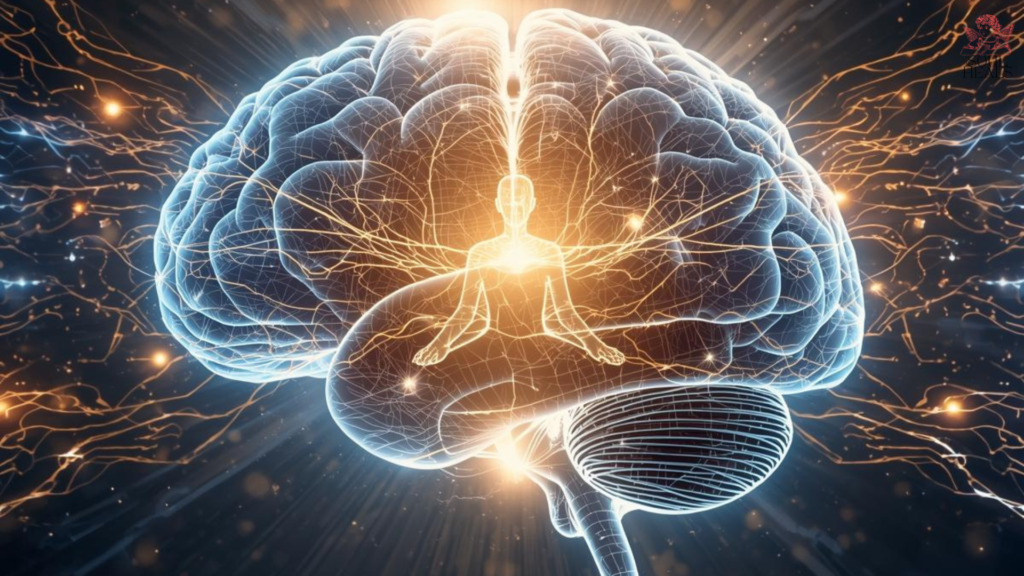
Scientific Spirituality Quiz
Discover how meditation is transforming your brain, emotions, and identity

Neuroscience is revealing how meditation physically changes brain structure, emotional regulation, and sense of self. This assessment measures your current integration of mindfulness practices and their neurological impact.
Based on research: Regular meditation increases gray matter density in areas linked to learning, memory, self-awareness, and compassion.
The American mind is undergoing a fascinating shift. Meditation, once seen as an esoteric or foreign spiritual practice, has now entered homes, schools, wellness studios, corporate offices, and even therapy clinics. This transformation is not simply cultural. It is biological, emotional, and psychological.
Scientific spirituality offers a new lens for understanding the self. It blends ancient meditative wisdom with modern neuroscience. More Americans are adopting meditation not as a religious ritual but as a tool for brain optimization, emotional healing, and identity reconstruction.
“Scientific spirituality bridges what we feel in the heart and what we can measure in the brain.”
The Rise of Scientific Spirituality in America
Americans increasingly want spirituality that aligns with evidence, personal experience, and psychological growth. Traditional religion rarely provides neurobiological explanations, but meditation does.
Young professionals, therapists, creatives, and students are turning to meditation because it offers:
- Emotional stability
- Cognitive clarity
- Brain-body balance
- Inner meaning without dogma
- Scientific credibility
This shift reflects a broader cultural desire for practices over beliefs. Meditation requires no faith. It requires presence. It requires curiosity.
The widespread adoption of meditation apps, mindfulness programs in public schools, and breathwork training in companies signals that the country is moving toward scientifically validated spirituality.
How Meditation Rewires the American Brain
The brain is not fixed. It constantly reshapes itself through neuroplasticity. Meditation leverages this natural ability. Neuroscientists can now observe structural and functional changes in the brains of consistent meditators.
“Every mindful breath is a micro-intervention that changes the brain.”
1. Thickening of the Prefrontal Cortex
The prefrontal cortex controls:
- Decision-making
- Focus
- Planning
- Emotional regulation
Studies show that people who meditate regularly develop increased cortical thickness in this region. This helps improve attention span in a world of endless digital distraction.
2. Shrinking of the Amygdala
The amygdala governs fear and stress responses. Meditation reduces its activation, which results in:
- Lower anxiety
- Better impulse control
- Reduced emotional reactivity
As Americans navigate social pressure, financial stress, and busy lifestyles, this calming effect has become one of meditation’s most valued benefits.
3. Stronger Connectivity in the Default Mode Network
The Default Mode Network (DMN) is active during:
- Mind-wandering
- Self-criticism
- Rumination
Meditation disrupts overactivity in the DMN. This leads to:
- Less overthinking
- More presence
- Deeper inner stillness
Many people describe this as the scientific explanation for “quieting the inner noise.”
4. Increased Production of Gamma Waves
Experienced meditators show higher levels of gamma waves associated with:
- Insight
- Compassion
- Learning
- Integration of experiences
This state supports deeper spiritual practices, making meditation both a scientific and mystical tool.
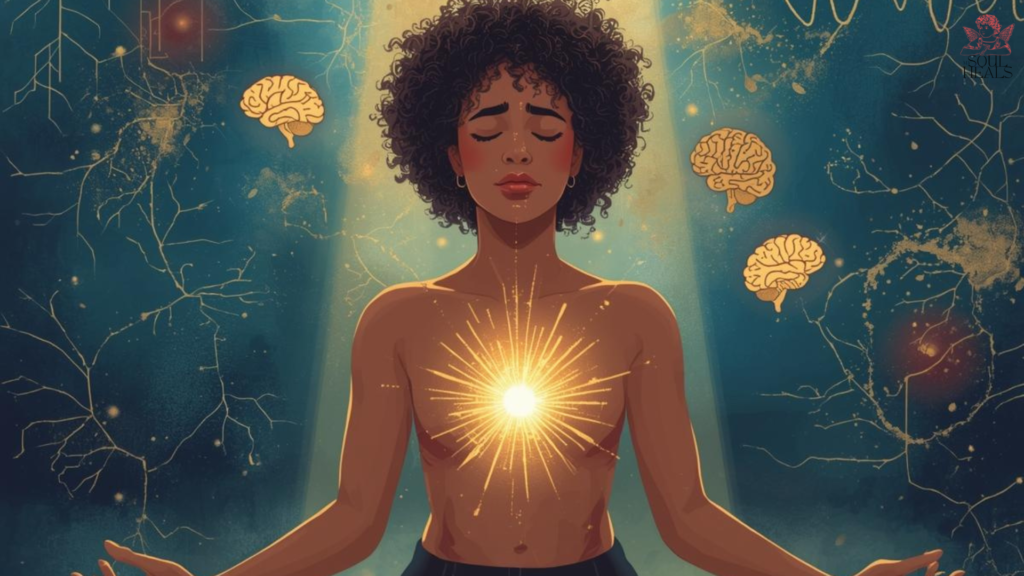
Meditation and Emotional Healing: A New American Therapy
Meditation has become a powerful emotional healing method. It blends well with modern psychology while providing benefits that traditional therapy sometimes cannot achieve alone.
“Stillness becomes a therapist when the mind learns how to listen.”
1. Healing Trauma Through Body Awareness
Mindfulness and breathwork help people reconnect with their bodies. Emotional trauma is stored physically. Meditation supports:
- Reduced stress hormones
- Relaxation of the nervous system
- Increased vagal tone
- Improved emotional recognition
This helps trauma survivors regain a sense of safety.
2. Dissolving Emotional Overload
Americans face:
- High-pressure work cultures
- Social media comparison
- Rapid news cycles
- Constant multitasking
Meditation acts like an emotional detox, clearing accumulated stress.
People report:
- Better mood stability
- Reduced irritability
- Increased emotional resilience
3. Cultivating Self-Compassion
Meditation softens inner judgment. When the mind slows down, self-criticism loses its power.
Self-compassion practices help:
- Reduce shame
- Enhance self-worth
- Improve mental health
- Strengthen personal boundaries
4. Elevating Positive Emotions
Practices like loving-kindness meditation, gratitude journaling, and focused breathing help generate:
- Calm
- Appreciation
- Joy
- Empathy
This emotional uplift has changed how individuals navigate relationships, work, and daily stress.
Redefining Identity Through Meditation
Identity in America has long been shaped by external labels: career, achievements, money, social status, or appearance. Meditation shifts this paradigm by helping people explore their inner identity beyond the material.
“Who am I when the noise fades? Meditation invites this question.”
1. Moving Beyond Ego-Driven Identity
Meditation reduces attachment to ego-centered labels. People begin to see themselves as:
- A witness of thoughts
- A conscious presence
- More than a job title
- More than social roles
This creates a stable sense of self.
2. Building an Inner Identity Based on Awareness
Through consistent practice, individuals develop an identity grounded in:
- Awareness
- Intuition
- Emotional intelligence
- Inner peace
This identity is less reactive and more resilient.
3. Strengthening Values-Based Living
Meditation makes people reflect on:
- What matters
- What aligns with their soul
- What they want to contribute to the world
A values-driven identity leads to healthier choices and purposeful living.
4. Creating Authenticity in a Digital Age
Meditation helps protect mental space in a world dominated by external validation.
People who meditate develop:
- Stronger self-trust
- More clarity in decisions
- Less dependence on societal approval
Authenticity becomes a natural result of inner clarity.
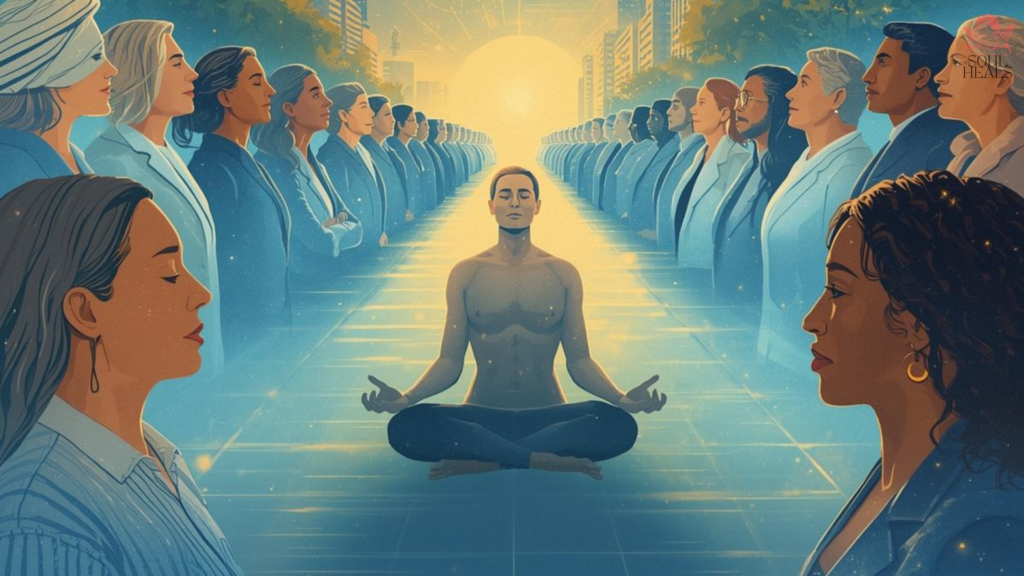
Why Scientific Spirituality Appeals to Americans Today
Scientific spirituality fits perfectly into modern American culture because it is adaptable, personalized, and evidence-based. It does not require institutions or intermediaries.
1. Science Validates the Benefits
Brain imaging, psychology, and biology confirm what ancient practices have known:
- Meditation reduces stress
- Meditation increases cognitive abilities
- Meditation improves emotional balance
- Meditation rewires neural pathways
This evidence gives Americans confidence to embrace spiritual methods without adopting religious frameworks.
2. It Blends Well with Modern Lifestyles
Meditation can be practiced:
- At home
- At work
- In schools
- During commutes
- Before sleep
Its simplicity makes it accessible to everyone.
3. It Supports Mental Health Cultures
As mental health awareness grows, meditation complements therapy, medication, and holistic healing. Many psychologists now teach mindfulness in their sessions.
4. It Encourages Inner Agency
Unlike dogmatic spirituality, scientific spirituality empowers individuals. You do not rely on external approval. The transformation is self-directed and self-experienced.
Meditation as a Cognitive Enhancer in America’s High-Performance Culture
America values performance, productivity, and innovation. Meditation fits this mindset by enhancing cognitive functions.
1. Improved Focus and Concentration
Meditation sharpens attention, improving work performance. Many CEOs and creatives meditate to sharpen mental clarity.
2. Enhanced Creativity and Problem-Solving
Meditation increases idea generation by:
- Quieting the analytical mind
- Opening intuitive pathways
- Encouraging mental spaciousness
Innovators often turn to meditation to break creative blocks.
3. Better Decision-Making
A calm mind makes smarter choices. Meditation helps regulate emotional impulses and see long-term consequences clearly.
4. Memory and Learning Boost
Studies show improved working memory among meditators. Students and professionals use mindfulness to study more effectively.
The Social Impact: A More Mindful American Culture
Meditation is shaping not just individuals but families, workplaces, and communities.
1. Mindful Parenting
Parents use meditation to:
- Reduce reactive anger
- Communicate calmly
- Understand children’s emotional needs
Children benefit from watching calm behavior modeled at home.
2. Mindfulness in Schools
More schools include meditation breaks. This supports:
- Emotional regulation
- Focus
- Conflict resolution
- Stress reduction
Young people gain tools that prevent lifelong stress patterns.
3. Corporate Mindfulness Programs
Workplaces introduce mindfulness sessions because they improve:
- Team cooperation
- Employee well-being
- Productivity
- Leadership communication
4. Community Healing and Connection
Meditation circles and wellness groups foster belonging. People form communities not based on ideology but personal growth.

Challenges in the Rise of Scientific Spirituality
Not all aspects of meditation’s American rise are smooth. There are challenges that require thoughtful navigation.
1. Overcommercialization
Meditation apps, wellness influencers, and spiritual brands sometimes commodify ancient wisdom. This can dilute authenticity.
2. Misguided Expectations
Some expect meditation to be a quick fix. Real benefits come through consistent practice.
3. Cultural Misappropriation
It’s important to honor the traditions that shaped meditation:
- Buddhism
- Hinduism
- Taoism
- Indigenous practices
Awareness ensures respect for origins.
4. Difficulty Staying Consistent
Busy lifestyles make daily meditation challenging. But even short sessions create long-term benefits.
Practical Ways to Begin or Deepen a Meditation Practice
Meditation is simple, but starting intentionally increases success.
1. Start Small
Begin with:
- Two minutes
- Five minutes
- One mindful breath
Small steps create consistency.
2. Use Anchor Practices
Anchors help build routine:
- Meditation after waking
- Meditation before bed
- Meditation after brushing teeth
Routines reduce resistance.
3. Explore Different Techniques
Try:
- Breath meditation
- Body scan
- Walking meditation
- Loving-kindness
- Visualization
- Open-awareness meditation
You’ll find a technique that aligns with your personality.
4. Track Your Emotional Shifts
Journaling progress boosts motivation. Track:
- Mood changes
- Stress levels
- Clarity
- Emotional resilience
5. Create a Sacred Space
Even a small corner can help anchor practice. Add:
- A candle
- Soft lighting
- Plants
- A comfortable mat
The environment enhances focus.
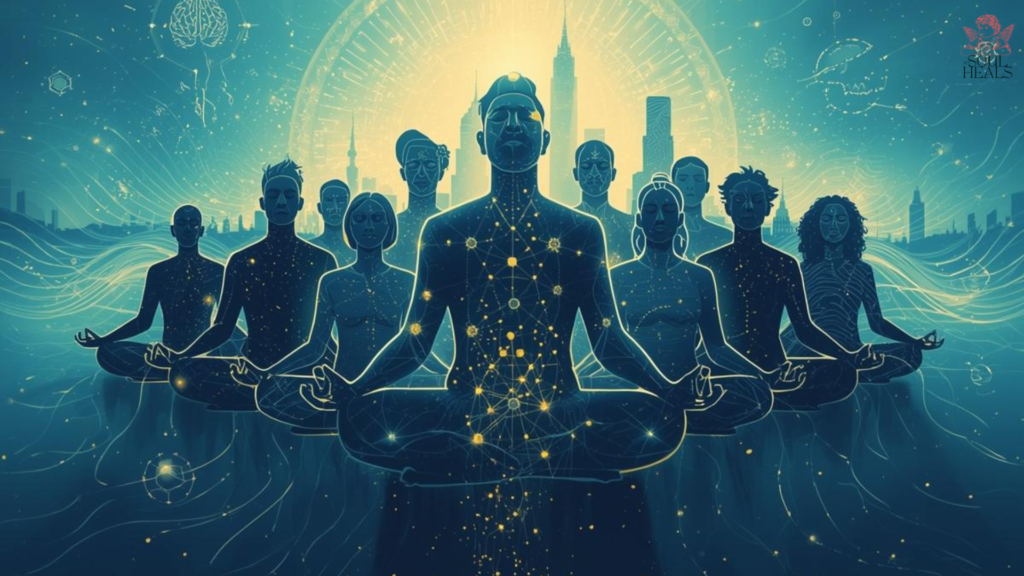
How Meditation Shapes the Future American Identity
Meditation is not just a wellness trend. It is reshaping how Americans understand themselves and the world.
1. A Shift Toward Mindful Living
People are adopting:
- Conscious consumption
- Slow living
- Emotional awareness
- Authentic communication
2. A Move Toward Self-Directed Spirituality
Individuals create personalized spiritual paths. Meditation becomes a universal tool, connecting people across cultures.
3. An Identity Rooted in Presence
People no longer define themselves by external chaos but by inner clarity.
4. A Collective Rise in Emotional Intelligence
Meditation strengthens empathy and compassion, reshaping relationships and community bonds.
The Neuroscience of Spiritual Experiences: Why Americans Seek “Something More”
Meditation does more than relax the mind. It creates neurological conditions that mirror what many describe as spiritual awakening. This is one reason Americans are turning toward scientific spirituality with such enthusiasm. These experiences feel profound, but they are also measurable in the brain.
“Spiritual experiences are not supernatural. They are neurobiological states of expanded awareness.”
Scientists studying meditators have discovered patterns that explain why people report a sense of connection, purpose, and oneness during deep practice.
1. Deactivation of the Parietal Lobes
The parietal lobes help us perceive boundaries between ourselves and the world. During deep meditation, activity in this area decreases. This creates:
- A sense of unity
- The feeling of dissolving into the present moment
- Reduced psychological separation
- Heightened connection with nature and people
These experiences feel spiritual because they challenge the ego’s illusion of separateness.
2. Enhanced Activity in the Insula
The insula helps us feel internal states like heartbeat, breath, and emotions. Meditation strengthens this region, resulting in:
- Heightened intuition
- Greater emotional awareness
- A deeper connection to the body
- More empathy toward others
In spiritual terms, this feels like a return to inner wisdom.
3. Activation of the “Compassion Network”
Brain regions associated with empathy light up during loving-kindness meditation. These include:
- The anterior cingulate cortex
- The orbitofrontal cortex
- The temporoparietal junction
This creates a measurable sense of warmth, generosity, and connection.
For many Americans, compassion-based meditation is not just a practice but a transformation of personality.
Meditation and the Transformation of American Work Culture
The American workplace is one of the biggest beneficiaries of meditation’s rise. Stress, burnout, and anxiety have become persistent issues in corporate environments. Meditation is now being used as a tool for emotional stabilization and cognitive performance.
“Stillness has become the most underrated productivity strategy in America.”
1. Reducing Corporate Burnout
Meditation helps employees recover from constant pressure by:
- Lowering cortisol
- Improving emotional regulation
- Enhancing mood stability
- Increasing mental endurance
Many organizations now offer mindfulness breaks to reduce attrition and increase well-being.
2. Improving Team Cooperation
Teams that meditate together often show:
- Reduced conflict
- Higher empathy
- Better communication
- Stronger collective problem-solving
Meditation makes emotional awareness a shared language.
3. Enhancing Leadership Qualities
Mindful leaders demonstrate:
- Calm decision-making
- Clear strategic thinking
- Emotional maturity
- Higher resilience in difficult moments
Leadership training programs in America increasingly incorporate mindfulness as a foundational skill.
4. Encouraging Ethical Behavior
Meditation’s emphasis on awareness and compassion reduces unethical behavior by strengthening internal regulation. Employees report feeling more grounded, honest, and balanced.
This marks a silent cultural revolution in America’s work ethic.

Meditation and the Crisis of American Loneliness
America is currently facing a loneliness epidemic. Despite technology, many people feel emotionally disconnected. Meditation offers a surprising but powerful solution by reconnecting people to themselves and to others.
“Loneliness begins to dissolve when we reconnect with our own inner presence.”
1. Reconnecting With the Self
Many Americans live externally focused lives. Meditation reverses this by helping individuals:
- Notice their inner world
- Understand their feelings
- Build a relationship with silence
This reduces the emotional emptiness that fuels loneliness.
2. Increasing Emotional Availability
Meditation helps people soften defensiveness and lower emotional walls. This creates better relationships through:
- Active listening
- Empathy
- Presence
- Authentic communication
People feel more seen and more capable of seeing others.
3. Creating Inner Companionship
Meditators report a sense of inner companionship that feels comforting. This internal support system reduces the need for constant external validation.
4. Building Community Through Shared Practice
Group meditation circles and online communities create genuine belonging. These shared spaces allow people to connect on values, growth, and presence – not just shared interests.
The Silent Revolution: Meditation in the American Family System
Meditation is shaping how American families handle conflict, stress, and emotional communication. This is one of the most transformative cultural shifts of the last decade.
1. Parents Modeling Emotional Intelligence
Parents who meditate become:
- Less reactive
- More patient
- Better regulated
- More compassionate
Children learn emotional stability through observation.
2. Teaching Children Self-Awareness Early
Children who learn mindfulness show:
- Better focus
- Reduced anxiety
- Increased social skills
- Higher resilience
Elementary schools now include short meditation sessions to help children navigate emotions.
3. Healing Intergenerational Stress Patterns
Families pass down emotional tendencies unconsciously. Meditation allows individuals to interrupt unhealthy patterns by:
- Recognizing triggers
- Responding instead of reacting
- Communicating openly
- Processing past experiences
This creates healthier family environments.
4. Strengthening Family Bonds
When a family meditates together, shared stillness becomes a bonding ritual. It creates emotional safety and mutual respect.

Meditation as America’s “Inner Technology” of the Future
With rapid advancements in AI, digital communication, and virtual reality, Americans are searching for inner tools that balance technological overload.
Meditation is becoming the country’s “inner technology” – a human operating system.
Why It Matters for the Future
- It enhances mental adaptability
- It supports emotional intelligence
- It balances overstimulation
- It strengthens intuition
- It develops higher cognitive states
Meditation helps future generations remain human in an increasingly digital world.
The Coming Wave of Neuro-Spiritual Wellness
Future wellness trends will likely include:
- Brain-based meditation training
- Neurofeedback-enhanced mindfulness
- AI-guided personalized breathwork
- Trauma-informed mindfulness methods
- Community-driven spiritual science groups
America is entering a new era where science and spirituality no longer compete – they collaborate.
“When Science Meets Soul”
Meditation symbolizes a meeting point. The ancient and the modern. The measurable and the mystical. The brain and the soul. Scientific spirituality is not replacing religion in America; it is expanding the meaning of spirituality itself.
“Inner silence is becoming the new form of intelligence.”
As Americans meditate, they are building a new identity, one grounded in presence, compassion, and self-awareness. The result is a country slowly remembering the value of inner work.

Explore Our Free Divination Tools
Unlock guidance, clarity, and insight with our collection of mystical tools — designed to help you understand love, destiny, and life’s deeper meaning.
✦ Related Articles You May Love
- Heart Chakra Healing For Self Love
- Aromatherapy Blends For Chakra Energy Healing
- The Power Of Silence How To Reclaim Stillness In A Noisy Overstimulated World
- Book List For Divine Feminine Awakening
- Interviews With Past Life Regression Authors
- Recommended Books For Emotional Detox
- Memoirs Of Spiritual Rebirth Journeys
- Books On Healing Mother Wound Trauma
- Poetry Based Meditation Reading
- Chakra Energy Habits For Daily Life
- Inner Alignment With Chakra Affirmations
- Signs Your Sacral Chakra Is Over Nurturing
- Crown Chakra Healing For Spiritual Downloads
- Relationship Wounds And Heart Chakra Blocks
- Understanding Past Life Chakra Imprints
- Chakra Breath Cycles For Inner Peace
- Healing Music Frequencies For Each Chakra
- Foods That Support Each Chakra
- Chakra Journaling For Emotional Clarity
- Spiritual Awakening Memoirs That Inspire Change
- How Soulful Storytelling Supports Emotional Resilience
- Readers Journey Transformation Through Spiritual Fiction
- Mystical Poetry That Evokes Healing And Hope 2
- Mystical Poetry That Evokes Healing And Hope
- Reflective Prompts From Sacred Indigenous Texts
- Soulful Bedtime Stories To Ease Worry 2
- Soulful Bedtime Stories To Ease Worry
- Journaling Prompts For Intuitive Dream Recall
- Interview With Energy Healer On Ancestral Healing
- Book List Gentle Spiritual Reads For Beginners
- Gratitude And Energy Expansion Guided Meditation
- Journey For Forgiveness And Self Compassion
- Nighttime Guided Cleansing For Busy Minds
- Sound Journey With Binaural Beats For Chakra Flow
- Inner Child Healing Guided Journey Script
- Guided Walk Meditation For Mindful Mornings
- Visualization Journey To Meet Your Spirit Animal
- Herbal Tea Rituals For Chakra Balance
- Healing Altar Ideas For Small Apartments
- Tapping Eft On Solar Plexus To Reduce Stress
- Visualisation With Colours For Anxiety Relief
- Simple Self Reiki Sequence After A Busy Day
- Ritual Bath Before Bed For Cleansing
- Yoga For The Sacral Chakra After A Creative Block
- Mystical Poetry That Ignites Spiritual Healing Readings
- True Soul Stories Of Transformation Through Meditation
- Yoga Flows To Balance The Throat And The Third Eye
- Crystal Suggestions For Heart Chakra Compassion
- Sound Healing At Home With Singing Bowls
- Aromatherapy Blends For Sacral Chakra Opening