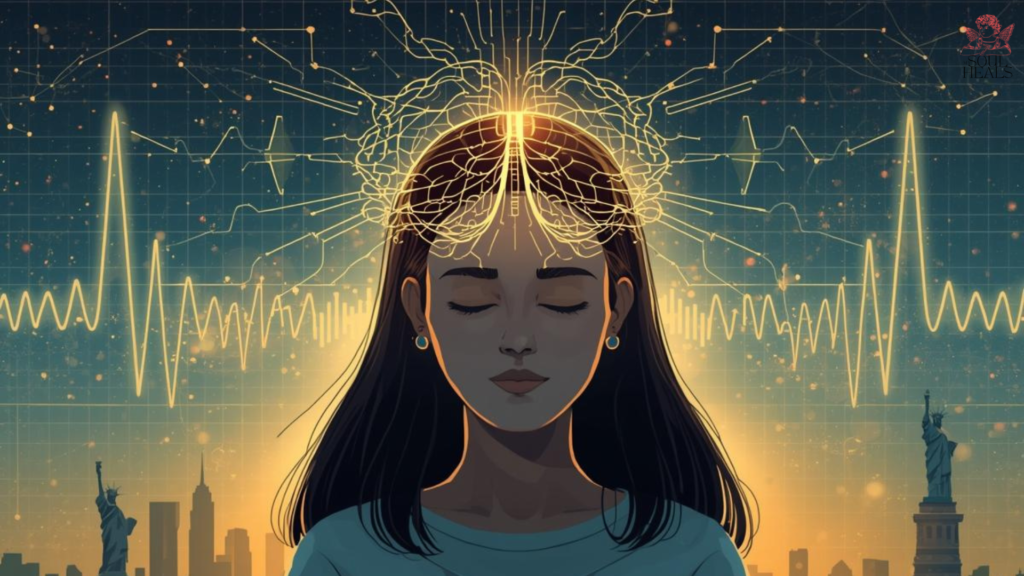
Mindfulness has evolved from a spiritual practice into a major area of scientific interest across American universities, neuroscience laboratories, and medical institutions. Researchers are no longer asking whether mindfulness works; they are studying how deeply it transforms the brain.

Modern American life, shaped by digital overload, constant cognitive stimulation, and rising mental health challenges, has created a unique environment in which meditation is more than a wellness trend. It is a neurobiological necessity.
Over the last two decades, scientists using fMRI imaging, EEG recordings, and neurochemical analysis have mapped the inner changes triggered by mindfulness. These changes are not anecdotal or abstract. They are visible, measurable, and scientifically repeatable. Meditation modifies brain regions responsible for emotion, memory, attention, learning, decision-making, and stress regulation.
“Mindfulness is reshaping the American brain not through magic, but through neuroplasticity.”
This post explores the detailed neuroscience behind mindfulness and explains why it is becoming one of the most studied mental training tools in the United States.
The Rise of Mindfulness in American Neuroscience
Mindfulness research has accelerated significantly since the early 2000s. American institutions such as Harvard, UCLA, Stanford, Massachusetts General Hospital, and the University of Wisconsin have conducted hundreds of studies on how meditation affects the brain.
Why American scientists are increasingly studying mindfulness:
- Growing rates of stress, anxiety, burnout, and depression
- High dependence on digital technology
- Cognitive decline caused by multitasking and overstimulation
- Demand for non-pharmaceutical mental health interventions
- Increase in research technology that allows high-resolution brain imaging
- Rising interest in preventive healthcare
American neuroscientists discovered that mindfulness offers a rare combination: clinically significant outcomes without invasive procedures.
“Mindfulness has become a scientifically respected tool because it engages the brain’s natural healing and rewiring capabilities.”
Modern American Cognitive Challenges: Why Mindfulness Matters Now
Americans face a uniquely intense cognitive climate. The modern brain is exposed to more information in one day than previous generations encountered in weeks. This creates a neurological strain that undermines emotional stability, decision-making, and attention span.
The cognitive pressures affecting the American brain:
- Continuous digital stimulation
- News overload
- Social media-induced comparison
- Work-related performance pressure
- Academic competitiveness
- Emotional fatigue
- Declining sleep quality
These pressures overstimulate the sympathetic nervous system and weaken brain regions essential for emotional control and cognitive clarity. Mindfulness serves as a counter-regulator, rebalancing neural activation.

How Mindfulness Works: A Deep Dive Into Brain Science
Mindfulness – defined as intentional, nonjudgmental awareness of the present moment – activates multiple interconnected brain processes. These include neuroplasticity, emotional regulation, sensory integration, memory enhancement, and stress reduction.
Below are the central neuroscientific mechanisms through which meditation reshapes the brain.
1. Neuroplasticity: The Foundation of Mindfulness-Based Brain Change
Neuroplasticity is the brain’s ability to reorganize itself throughout life. Mindfulness accelerates neuroplasticity by strengthening existing neural pathways and creating new ones.
How mindfulness enhances neuroplasticity:
- Increases production of brain-derived neurotrophic factor (BDNF)
- Stimulates growth of new synapses
- Enhances neural communication efficiency
- Helps rewire harmful emotional patterns
- Allows the brain to recover from trauma and chronic stress
“Mindfulness is one of the few mental exercises that can physically sculpt neural circuits.”
Neuroplasticity explains why meditation improves cognitive and emotional skills even in older adults.
2. Prefrontal Cortex Strengthening: Improving Executive Function
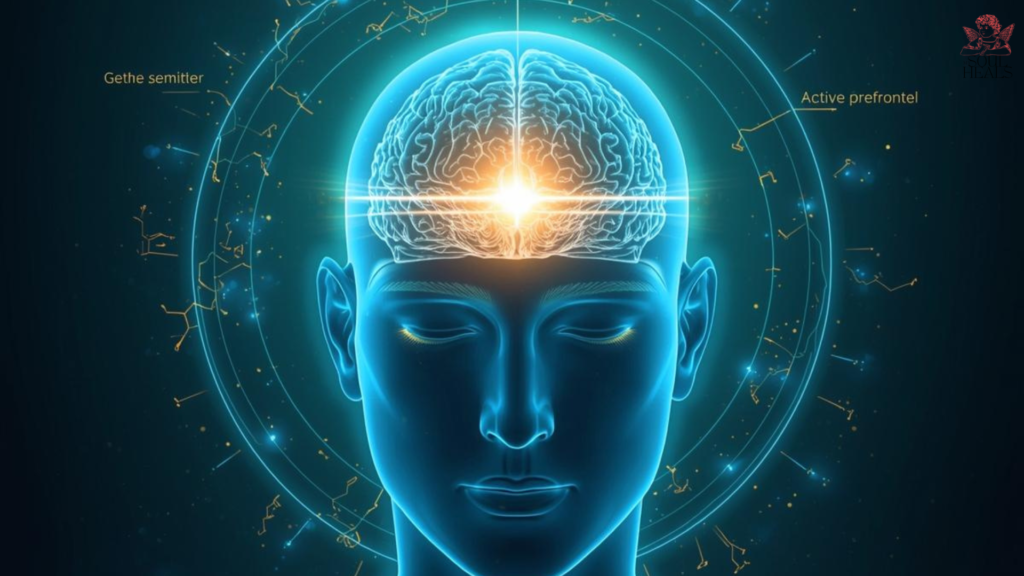
The prefrontal cortex (PFC) is the command center of the brain. It regulates planning, attention, reasoning, impulse control, and emotional management.
Chronic stress weakens this region, but mindfulness reverses these effects.
Scientific findings show mindfulness causes:
- Increased cortical thickness
- Enhanced neural density
- Stronger PFC-limbic connectivity
- Higher activation during cognitive tasks
These changes explain why mindfulness practitioners demonstrate better self-control, improved focus, and higher-quality decision-making.
In high-pressure American workplaces, enhanced PFC function improves productivity, leadership ability, and emotional regulation.
3. Amygdala Shrinkage: Reducing Stress and Emotional Reactivity
The amygdala controls fear, stress responses, threat detection, and emotional reactivity. Chronic stress enlarges it and increases cortisol production.
Mindfulness produces the opposite effect.
Meditation results in:
- Reduced amygdala gray matter
- Lowered emotional reactivity
- Decreased fear responses
- Better communication with the prefrontal cortex
In practical terms, this means practitioners are less likely to overreact, panic, or become overwhelmed.
“Mindfulness teaches the amygdala to respond with clarity, not alarm.”
This is one reason mindfulness is widely used in treating anxiety disorders in the United States.
4. Hippocampal Growth: Enhancing Memory and Learning
The hippocampus is responsible for memory formation, spatial awareness, and emotional processing. Stress shrinks the hippocampus, impairing learning and causing mood instability.
Mindfulness helps repair and strengthen this area.
Scientific benefits include:
- Greater hippocampal volume
- Improved memory retention
- Enhanced learning speed
- Better emotional interpretation
This is especially helpful for students, professionals, and older adults at risk of cognitive decline.
5. Strengthening of the Insula: Boosting Self-Awareness
The insula interprets internal bodily signals such as heartbeat, tension, and emotional energy. A highly active insula enhances emotional awareness, empathy, and intuition.
Mindfulness significantly increases insular activation.
Benefits of heightened insula function:
- Sharper emotional awareness
- Better body–mind connection
- Improved decision-making
- Increased empathy and compassion
- Enhanced ability to read subtle emotional cues
This explains why mindfulness improves interpersonal relationships and emotional intelligence.
“Mindfulness reconnects the modern brain to sensations it has forgotten how to feel.”
6. Enhanced Gamma Wave Activity: Improving Information Processing
Gamma brainwaves are associated with insight, high-level cognition, and integrative thinking. Experienced meditators show significantly elevated gamma activity.
Increased gamma waves support:
- Faster cognitive processing
- Improved sensory integration
- Higher creativity
- Spiritual clarity
- Enhanced memory retrieval
American neuroscientists consider gamma activity one of the strongest markers of advanced mindfulness practice.
7. Reduction of Default Mode Network (DMN) Activity: Decreasing Rumination
The Default Mode Network activates when the mind wanders, when people worry, or when they replay past or future scenarios. Overactivity is linked to anxiety and depression.
Meditation reduces DMN activity and strengthens present-moment awareness.
Effects of reduced DMN activation:
- Less overthinking
- Decreased self-rumination
- Improved emotional stability
- Lower anxiety
- Enhanced focus
For many Americans, whose mental lives are dominated by rumination, DMN regulation is profoundly healing.
Neurochemical Changes Induced by Mindfulness
Mindfulness also alters neurotransmitter production and hormonal balance.
Key neurochemical effects:
- Increased dopamine → improved motivation and focus
- Higher serotonin → emotional stability
- Boost in GABA → reduced anxiety
- Enhanced melatonin → improved sleep
- Release of endorphins → elevated mood
- Decreased cortisol → reduced stress
These biochemical shifts support a more balanced emotional state and healthier brain function.
Mindfulness and Cognitive Performance: A Scientific Breakdown
Mindfulness enhances several specific cognitive faculties essential for modern functioning.
Cognitive improvements include:
- Stronger sustained attention
- Greater working memory capacity
- Improved executive function
- Faster cognitive switching
- Better accuracy during complex tasks
- Reduced distraction sensitivity
These changes occur because meditation strengthens frontal lobe networks responsible for high-level thinking.
Mindfulness and Emotional Intelligence: Neuroscience of Better Relationships
Emotional intelligence relies on several neural systems working together: the insula, the prefrontal cortex, and the limbic system.
Mindfulness enhances their integration.
Emotional intelligence benefits:
- Greater empathy
- Improved emotional regulation
- Reduced impulsive reactions
- Clearer emotional communication
- Better conflict resolution skills
These improvements help in personal relationships, professional settings, and leadership roles.
“Mindfulness refines emotional intelligence by teaching the brain to pause before it reacts.”
Mindfulness in American Healthcare and Therapy
Mindfulness-based therapies have become a cornerstone of modern mental health practice in the United States.
Major therapeutic frameworks include:
- Mindfulness-Based Stress Reduction (MBSR)
- Mindfulness-Based Cognitive Therapy (MBCT)
- Dialectical Behavior Therapy (DBT)
- Acceptance and Commitment Therapy (ACT)
Conditions improved through mindfulness:
- PTSD
- Anxiety
- Depression
- Chronic pain
- Addiction
- ADHD
- Sleep disorders
Mindfulness assists clinicians in treating patients because it strengthens brain regions responsible for emotional regulation.

Groundbreaking American Studies on Mindfulness
Several highly influential studies support mindfulness-based brain changes.
1. Harvard MGH fMRI Study
Found increased cortical thickness and improved emotional regulation circuits after eight weeks.
2. UCLA Long-Term Meditator Study
Identified larger hippocampal and frontal lobe volume in meditators.
3. Yale DMN Research
Recorded reduced Default Mode Network activity during mindfulness.
4. UW–Madison Gamma Study
Observed unusually high gamma waves in advanced meditators.
These findings collectively prove that mindfulness reshapes brain structure and function.
Practical Mindfulness Techniques That Restructure the Brain
Scientific evidence supports several specific mindfulness practices.
1. Focused Attention Meditation
Trains the brain to control attention and strengthen executive function.
2. Open Monitoring Meditation
Enhances awareness of thoughts and emotions without reaction.
3. Body Scan Practice
Improves insula activation and bodily awareness.
4. Loving-Kindness Meditation
Boosts empathy and compassion circuits.
Regulates autonomic nervous system activity.
“Breath awareness is the simplest method to shift the brain from chaos to coherence.”
Mindfulness Integration in American Society
Mindfulness has moved from research labs to everyday life.
In Schools:
- Improves attention
- Reduces anxiety
- Enhances emotional control
- Supports academic performance
In Workplaces:
- Reduces burnout
- Improves leadership
- Enhances team collaboration
- Boosts cognitive clarity
In Healthcare:
- Supports chronic pain treatment
- Improves sleep
- Enhances trauma recovery
- Helps stabilize mood disorders
In Daily Life:
- Improves patience
- Reduces reactivity
- Strengthens interpersonal relationships
- Enhances overall wellbeing
Challenges and Misconceptions About Mindfulness
Common obstacles:
- Difficulty focusing
- Emotional discomfort during introspection
- Misconception that meditation requires “emptying the mind”
- Inconsistent practice
- Impatience with slow progress
Despite challenges, scientists emphasize that benefits begin as early as the first week of consistent practice.
Neuroplasticity Across the Lifespan: How Mindfulness Reshapes the Brain at Every Age
Neuroplasticity refers to the brain’s ability to reorganize itself by forming new neural connections. For years, scientists believed this process slowed dramatically after childhood. Modern neuroscience, however, confirms that mindfulness stimulates plasticity at every age. This makes mindfulness one of the few cognitive tools capable of strengthening brain networks throughout life.
Mindfulness activates circuits responsible for attention, emotional regulation, and sensory awareness. As these circuits fire repeatedly, they strengthen through Hebbian learning. This leads to structural changes such as increased synaptic density, improved network efficiency, and thicker cortical regions. In short, meditation acts like “exercise for the brain,” enhancing adaptability and resilience.
Childhood and Adolescence
In younger brains, mindfulness supports healthy cognitive development. The prefrontal cortex, which governs planning and impulse control, continues maturing through adolescence. Mindfulness helps accelerate and stabilize this development.
Key benefits for children include:
- Better emotional regulation
- Strengthened attention span
- Reduced impulsivity
- Improved working memory
- Healthier social decision-making
These improvements come from stronger connectivity between the amygdala and the prefrontal cortex, enabling better management of emotions and stress.
Adulthood
For adults, mindfulness becomes a protective factor against chronic stress, multitasking overload, and emotional fatigue. Stress hormones like cortisol can damage neural tissue over time, especially in the hippocampus. Meditation helps reduce these stress responses, preserving cognitive functions.
Notable adult benefits include:
- Lower stress reactivity
- Enhanced problem-solving
- Increased cognitive flexibility
- Improved emotional stability
- Stronger concentration
These outcomes are linked to balanced activity between the prefrontal cortex and limbic system, leading to calmer and more deliberate responses.
Older Adults and Aging Brains
Mindfulness has remarkable effects on aging brains. Research shows that long-term meditators display thicker cortices and higher hippocampal volume than non-meditators of the same age. It also supports gamma wave coherence, an indicator of healthy cognitive integration.
For seniors, mindfulness contributes to:
- Slower age-related cognitive decline
- Better memory retention
- Enhanced neural resilience
- Reduced inflammation markers
- Greater emotional well-being
The message is clear: “The brain never stops changing; it only needs the right experiences to reshape itself.” Mindfulness delivers those experiences consistently, making it a neuroprotective practice across the lifespan.
The Future of Mindfulness in America
The next evolution of mindfulness lies at the intersection of contemplative science and advanced technology. As neuroscience tools become more sophisticated, Americans are entering an era where meditation can be personalized, measured, and optimized using data-driven insights.
One major advancement is neuroadaptive meditation. These systems use EEG sensors to monitor brainwave activity and provide real-time feedback. When attention drifts, the device adjusts audio or visual cues to guide the brain back into focus. This closed-loop training accelerates neural learning by reinforcing ideal meditative states.
Neuroadaptive and AI-Driven Tools
Emerging technologies include:
- EEG meditation headbands
- Brainwave-sensing VR meditation environments
- AI-powered meditation coaches
- Apps that track neural biomarkers
These tools measure indicators such as alpha coherence, amygdala activity, and default mode network quieting. Based on the data, they adapt meditation techniques to the user’s neurophysiology.
Clinical Applications
The integration of AI into mental health treatment is expanding. Mental health practitioners are using neurofeedback-based meditation to address anxiety, attention deficits, PTSD, and depression.
Neuroscience-guided meditation supports:
- Reduced hyperarousal
- Lower rumination
- Stronger emotional regulation
- Better focus and task initiation
- Improved sleep patterns
By tracking neural signatures, digital therapeutics can deliver precise, personalized interventions.
Brain-Computer Interfaces (BCIs)
BCIs are being explored as tools to deepen meditation. Some devices detect physiological markers of relaxation and guide practitioners into deeper states. Others use meditation training to improve control over prosthetics or assistive devices.
Cultural and Societal Shifts
Technology is pushing mindfulness into mainstream American systems:
- Schools integrating mindfulness through interactive apps
- Corporations adopting neuro-based wellness programs
- Healthcare systems using meditation to reduce stress and improve outcomes
The future signals a cultural transformation. Americans are beginning to treat cognitive fitness with the same seriousness as physical fitness. As one researcher said, “Mindfulness is shifting from an ancient art to a modern neural science.”
In the coming years, meditation will be shaped by data, guided by AI, and supported by neurotechnology. This fusion will not replace traditional mindfulness but elevate it, giving individuals unprecedented insight into their minds and offering new ways to strengthen the brain.
America’s Silent Neural Revolution
Within laboratories, classrooms, corporate offices, and living rooms, a quiet revolution is taking place. The American brain – once shaped primarily by speed, pressure, and digital saturation – is learning a new rhythm. Through mindfulness, tens of millions are rewiring their neural circuits toward clarity, compassion, stability, and resilience.
“Mindfulness is not only changing individual minds. It is reshaping the cognitive future of an entire nation.”

Explore Our Free Divination Tools
Unlock guidance, clarity, and insight with our collection of mystical tools — designed to help you understand love, destiny, and life’s deeper meaning.
✦ Related Articles You May Love
- Heart Chakra Healing For Self Love
- Aromatherapy Blends For Chakra Energy Healing
- The Power Of Silence How To Reclaim Stillness In A Noisy Overstimulated World
- Book List For Divine Feminine Awakening
- Interviews With Past Life Regression Authors
- Recommended Books For Emotional Detox
- Memoirs Of Spiritual Rebirth Journeys
- Books On Healing Mother Wound Trauma
- Poetry Based Meditation Reading
- Chakra Energy Habits For Daily Life
- Inner Alignment With Chakra Affirmations
- Signs Your Sacral Chakra Is Over Nurturing
- Crown Chakra Healing For Spiritual Downloads
- Relationship Wounds And Heart Chakra Blocks
- Understanding Past Life Chakra Imprints
- Chakra Breath Cycles For Inner Peace
- Healing Music Frequencies For Each Chakra
- Foods That Support Each Chakra
- Chakra Journaling For Emotional Clarity
- Spiritual Awakening Memoirs That Inspire Change
- How Soulful Storytelling Supports Emotional Resilience
- Readers Journey Transformation Through Spiritual Fiction
- Mystical Poetry That Evokes Healing And Hope 2
- Mystical Poetry That Evokes Healing And Hope
- Reflective Prompts From Sacred Indigenous Texts
- Soulful Bedtime Stories To Ease Worry 2
- Soulful Bedtime Stories To Ease Worry
- Journaling Prompts For Intuitive Dream Recall
- Interview With Energy Healer On Ancestral Healing
- Book List Gentle Spiritual Reads For Beginners
- Gratitude And Energy Expansion Guided Meditation
- Journey For Forgiveness And Self Compassion
- Nighttime Guided Cleansing For Busy Minds
- Sound Journey With Binaural Beats For Chakra Flow
- Inner Child Healing Guided Journey Script
- Guided Walk Meditation For Mindful Mornings
- Visualization Journey To Meet Your Spirit Animal
- Herbal Tea Rituals For Chakra Balance
- Healing Altar Ideas For Small Apartments
- Tapping Eft On Solar Plexus To Reduce Stress
- Visualisation With Colours For Anxiety Relief
- Simple Self Reiki Sequence After A Busy Day
- Ritual Bath Before Bed For Cleansing
- Yoga For The Sacral Chakra After A Creative Block
- Mystical Poetry That Ignites Spiritual Healing Readings
- True Soul Stories Of Transformation Through Meditation
- Yoga Flows To Balance The Throat And The Third Eye
- Crystal Suggestions For Heart Chakra Compassion
- Sound Healing At Home With Singing Bowls
- Aromatherapy Blends For Sacral Chakra Opening