Chakra healing is an ancient practice rooted in holistic wellness, energy alignment, and self-awareness. In today’s fast-paced world, many people experience emotional stress, mental fatigue, and physical imbalance without understanding their deeper energetic causes. This chakra healing guide is designed to help you explore the powerful energy centers within your body and learn how they influence your thoughts, emotions, and overall well-being.
Chakras act as vital energy wheels that regulate the flow of life force energy, connecting the mind, body, and spirit into a harmonious system. When these energy centers are balanced, you feel grounded, focused, emotionally stable, and physically energized. However, when one or more chakras become blocked or overactive, it can manifest as anxiety, low motivation, recurring health issues, or emotional confusion.
This chakra healing guide offers a clear and practical roadmap to understanding each chakra meanings, common signs of imbalance, and effective healing practices. Whether you are a beginner seeking awareness or someone deepening their spiritual journey, this guide will support daily balance through mindful techniques such as meditation, breathing exercises, affirmations, and lifestyle alignment. By learning how to work with your chakras intentionally, you empower yourself to restore inner harmony, enhance self-healing, and cultivate a more conscious, aligned, and fulfilling life.
Understanding Chakras: The Foundation of Energy Healing
Chakras are the core of many ancient healing systems and spiritual traditions. They represent the subtle energy centers within the human body that regulate physical vitality, emotional balance, mental clarity, and spiritual awareness. Understanding chakras is the first step toward practicing energy healing and achieving inner harmony. When energy flows freely through these centers, the body and mind function in alignment. When this flow is disrupted, imbalance and discomfort can arise.
What Are Chakras?
The word chakra comes from Sanskrit and means “wheel” or “disk.” Chakras are spinning centers of energy located along the spine, from the base to the crown of the head. They act as gateways through which life force energy – often called prana – flows throughout the body.
Each chakra is associated with specific physical organs, emotional patterns, mental states, and spiritual themes. Together, they form an interconnected system that influences overall well-being.
Key characteristics of chakras include:
- They regulate the flow of energy in the body
- Each chakra vibrates at a unique frequency
- They connect physical health with emotional and spiritual states
The Chakra System Explained
Most chakra healing practices focus on the seven primary chakras. These chakras are aligned vertically along the spinal column and work together as an integrated energy network.
The seven main chakras are:
- Root Chakra – stability, safety, and survival
- Sacral Chakra – creativity, emotions, and pleasure
- Solar Plexus Chakra – confidence, willpower, and identity
- Heart Chakra – love, compassion, and connection
- Throat Chakra – communication and self-expression
- Third Eye Chakra – intuition and inner wisdom
- Crown Chakra – spiritual awareness and consciousness
When these chakras are balanced, energy flows smoothly, supporting physical health and emotional resilience.
How Chakras Support Energy Healing
Energy healing works by restoring balance to the chakra system. Instead of treating symptoms alone, chakra healing addresses the energetic root of imbalance.
Chakras support energy healing by:
- Clearing energetic blockages that disrupt natural flow
- Strengthening the connection between mind and body
- Enhancing the body’s natural self-healing ability
By working with chakras, energy healing encourages deep, long-lasting alignment rather than temporary relief.
Signs of Balanced vs. Imbalanced Chakras
A healthy chakra system reflects balance, clarity, and vitality. When chakras are blocked or overactive, imbalances can appear in different areas of life.
Signs of balanced chakras:
- Emotional stability and inner calm
- Physical vitality and steady energy levels
- Clear thinking and self-awareness
Signs of chakra imbalance:
- Persistent stress or anxiety
- Low motivation or emotional numbness
- Repeating physical discomfort without clear cause
Recognizing these chakra signs helps identify which chakra may need attention.
Why Understanding Chakras Is Essential
Understanding chakras creates awareness of how thoughts, emotions, and physical sensations are interconnected. This awareness empowers conscious healing and personal growth.
Benefits of chakra awareness include:
- Improved emotional regulation
- Stronger intuition and self-trust
- Greater alignment with life purpose
Rather than reacting to external stress, chakra awareness allows you to respond with balance and clarity.
Chakras as a Bridge Between Science and Spirituality
While chakras originate from spiritual traditions, they align closely with modern concepts of mind-body medicine. Each chakra corresponds to nerve clusters, endocrine glands, and psychological patterns.
This connection highlights how energy healing complements physical health practices by addressing subtle yet powerful influences on well-being.
Building a Strong Foundation for Chakra Healing
Understanding chakras lays the groundwork for deeper energy healing practices. Once you recognize how these energy centers function, you can begin working with meditation, breathwork, affirmations, and mindful living.
To build a strong foundation:
- Learn each chakra’s purpose and location
- Observe emotional and physical patterns
- Practice self-awareness without judgment
By mastering the basics of chakras, you create a stable foundation for healing, balance, and conscious transformation.
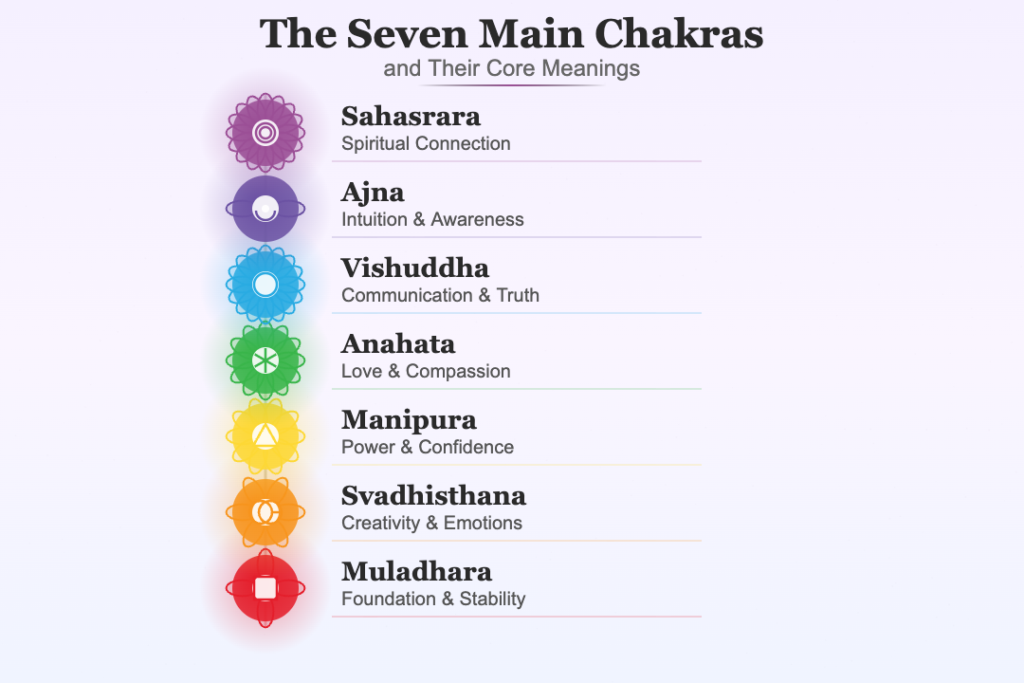
The Seven Main Chakras and Their Core Meanings
The human energy system is guided by seven primary chakras, each governing specific physical, emotional, and spiritual aspects of life. These chakras are aligned along the spine and work together to maintain energetic balance. Understanding their core meanings helps identify areas of strength and imbalance, forming the basis of effective chakra healing.
1. Root Chakra (Muladhara) – Foundation and Stability
- Located at the base of the spine
- Represents safety, security, and survival instincts
- Governs basic needs such as food, shelter, and financial stability
- Influences physical health of legs, feet, spine, and immune system
- Balanced root chakra creates feelings of grounding, confidence, and trust in life
2. Sacral Chakra (Svadhisthana) – Creativity and Emotions
- Located just below the navel
- Associated with emotions, pleasure, sensuality, and creativity
- Regulates relationships, intimacy, and emotional expression
- Influences reproductive organs and lower abdomen
- A balanced sacral chakra supports emotional flow, passion, and joy
3. Solar Plexus Chakra (Manipura) – Power and Confidence
- Located in the upper abdomen, above the navel
- Represents personal power, self-esteem, and willpower
- Governs decision-making, motivation, and discipline
- Connected to digestive system and metabolism
- When balanced, it creates confidence, clarity, and inner strength
4. Heart Chakra (Anahata) – Love and Compassion
- Located at the center of the chest
- Represents unconditional love, empathy, and emotional healing
- Governs relationships with self and others
- Influences heart, lungs, and circulatory system
- A balanced heart chakra fosters forgiveness, compassion, and emotional openness
5. Throat Chakra (Vishuddha) – Communication and Truth
- Located at the throat area
- Represents self-expression, honesty, and clear communication
- Governs listening skills and the ability to speak one’s truth
- Influences throat, neck, and thyroid function
- Balanced throat chakra supports confident expression and authentic communication
6. Third Eye Chakra (Ajna) – Intuition and Awareness
- Located between the eyebrows
- Associated with intuition, insight, and inner wisdom
- Governs imagination, perception, and clarity of thought
- Influences brain, eyes, and nervous system
- A balanced third eye chakra enhances intuition, focus, and self-awareness
7. Crown Chakra (Sahasrara) – Spiritual Connection
- Located at the top of the head
- Represents spiritual awareness and higher consciousness
- Governs connection to universal energy and inner peace
- Influences nervous system and overall mental clarity
- Balanced crown chakra promotes wisdom, enlightenment, and a sense of unity
Understanding Chakra Alignment
- Each chakra builds upon the one below it
- Lower chakras support physical and emotional stability
- Upper chakras guide intuition and spiritual growth
- Balanced chakras create harmony between mind, body, and spirit
By understanding the core meaning of each chakra, you gain valuable insight into how energy flows within you and how balance can be restored for holistic well-being.
How Chakra Imbalances Affect Mind, Body, and Emotions
Chakras act as energetic bridges between the mind, body, and emotions. When these energy centers are balanced, energy flows smoothly, supporting overall well-being. However, when one or more chakras become blocked, underactive, or overactive, the imbalance can affect multiple layers of your being. Chakra imbalances rarely impact just one area; they often create a chain reaction that influences mental clarity, physical health, and emotional stability simultaneously.
Impact of Chakra Imbalances on the Mind
The mind is closely linked to the upper chakras, particularly the solar plexus, throat, third eye, and crown chakras. When these centers are disrupted, mental patterns can become distorted.
A blocked or weakened solar plexus chakra may lead to self-doubt, poor decision-making, and a lack of confidence. You may struggle with motivation, feel mentally exhausted, or constantly seek validation from others. Imbalances in the throat chakra can create fear of expression, difficulty communicating thoughts, or mental confusion caused by suppressed emotions.
When the third eye chakra is imbalanced, clarity and intuition suffer. This may result in overthinking, lack of focus, or difficulty trusting inner guidance. Crown chakra imbalances can disconnect the mind from a sense of purpose, leading to mental fog, apathy, or feelings of isolation. Together, these mental effects can make it difficult to maintain perspective, clarity, and inner peace.
Physical Effects of Chakra Imbalances
Each chakra is associated with specific organs, glands, and bodily systems. When energy flow is disrupted, physical discomfort may appear in corresponding areas.
For example, root chakra imbalances often manifest as lower back pain, leg issues, fatigue, or immune weakness. Sacral chakra disturbances may affect reproductive health, lower abdominal discomfort, or hormonal imbalance. Solar plexus issues frequently show up as digestive problems, stomach pain, or metabolic irregularities.
Heart chakra imbalances can influence cardiovascular health, respiratory issues, or tension in the chest and shoulders. Throat chakra blockages may cause throat infections, neck stiffness, or thyroid-related challenges. Third eye and crown chakra imbalances are often linked to headaches, sleep disturbances, or nervous system sensitivity.
While not all physical symptoms originate from chakra imbalances, energetic disruption can weaken the body’s natural ability to heal.
Emotional Consequences of Chakra Blockages
Emotional health is deeply influenced by the lower and middle chakras. When these chakras are imbalanced, emotions may become overwhelming or suppressed.
A blocked root chakra can create constant fear, anxiety, or insecurity. Sacral chakra imbalances may result in emotional numbness, guilt, or difficulty forming intimate connections. When the solar plexus chakra is disrupted, feelings of shame, anger, or helplessness often arise.
Heart chakra imbalance can cause emotional withdrawal, resentment, or difficulty giving and receiving love. Suppressed emotions linked to the throat chakra may lead to frustration or emotional outbursts. When higher chakras are affected, emotions may feel disconnected, empty, or spiritually confused.
The Interconnected Nature of Chakra Imbalances
Chakras function as a unified system. An imbalance in one chakra can disrupt others, affecting the entire mind-body-emotion connection. For example, emotional suppression may block the throat chakra, which then impacts mental clarity and physical tension.
Understanding how chakra imbalances affect the mind, body, and emotions allows for holistic healing. By restoring energetic balance, you support emotional release, physical vitality, and mental clarity, creating a more aligned and harmonious state of being.
Signs and Symptoms of Blocked or Overactive Chakras
Chakras function as dynamic energy centers that regulate the flow of life force throughout the body. For optimal well-being, chakras must remain balanced – neither blocked nor overactive. When a chakra is blocked, energy flow becomes restricted, leading to stagnation and weakness in related areas. When a chakra is overactive, energy becomes excessive and unregulated, creating imbalance in a different way. Understanding the signs and symptoms of both conditions helps identify energetic disruptions early and restore harmony to the mind, body, and emotions.
Root Chakra (Muladhara) Imbalance
A blocked root chakra affects your sense of safety, stability, and grounding. You may feel disconnected from your body or insecure about basic life needs. Common symptoms include chronic fear, anxiety, financial stress, fatigue, and difficulty trusting others. Physically, this may show up as lower back pain, leg discomfort, poor circulation, or weakened immunity.
An overactive root chakra, on the other hand, can create excessive attachment to material security. You may become overly controlling, resistant to change, possessive, or obsessed with money and survival. This can manifest physically as tension, restlessness, or inflammation in the lower body.
Sacral Chakra (Svadhisthana) Imbalance
When the sacral chakra is blocked, emotional expression becomes restricted. You may experience emotional numbness, lack of creativity, low libido, or difficulty forming intimate relationships. Feelings of guilt, shame, or fear of pleasure are common. Physical symptoms may include reproductive issues, hormonal imbalance, or lower abdominal discomfort.
An overactive sacral chakra can cause emotional overwhelm, mood swings, dependency, or addictive behaviors. You may struggle with boundaries or seek constant stimulation. Physically, this may appear as hormonal irregularities, fluid retention, or chronic pelvic tension.
Solar Plexus Chakra (Manipura) Imbalance
A blocked solar plexus chakra often results in low self-esteem, indecision, and lack of motivation. You may feel powerless, insecure, or easily influenced by others. Digestive problems, stomach pain, fatigue, and metabolic issues are common physical signs.
An overactive solar plexus chakra may lead to excessive control, aggression, dominance, or perfectionism. You may feel the need to overpower situations or people. Physically, this can manifest as digestive inflammation, ulcers, or high stress-related conditions.
Heart Chakra (Anahata) Imbalance
When the heart chakra is blocked, emotional walls are built to protect from past pain. You may feel emotionally distant, fearful of intimacy, or unable to forgive. Loneliness, resentment, and grief are common emotional symptoms. Physical signs can include chest tightness, shallow breathing, heart-related discomfort, or shoulder tension.
An overactive heart chakra can cause emotional over-giving, lack of boundaries, or codependency. You may prioritize others’ needs at the expense of your own, leading to emotional exhaustion. This imbalance may also contribute to heart strain or respiratory sensitivity.
Throat Chakra (Vishuddha) Imbalance
A blocked throat chakra affects communication and self-expression. You may struggle to speak your truth, fear judgment, or suppress your emotions. Symptoms include social anxiety, throat tightness, chronic sore throat, neck pain, or thyroid imbalance.
An overactive throat chakra may result in excessive talking, interrupting others, or dominating conversations. You may express opinions forcefully without listening. Physically, this may appear as vocal strain, jaw tension, or throat irritation.
Third Eye Chakra (Ajna) Imbalance
When the third eye chakra is blocked, intuition weakens and mental clarity decreases. You may feel confused, disconnected from inner guidance, or overly reliant on logic. Symptoms include lack of focus, poor imagination, headaches, or eye strain.
An overactive third eye chakra can lead to excessive fantasizing, overthinking, mental overload, or difficulty staying grounded. You may feel detached from reality or emotionally unstable. Sleep disturbances and sensory sensitivity are common physical signs.
Crown Chakra (Sahasrara) Imbalance
A blocked crown chakra may cause spiritual disconnection, lack of purpose, or persistent mental fog. You may feel isolated, depressed, or disconnected from meaning. Physical symptoms can include chronic fatigue, tension headaches, or nervous system imbalance.
An overactive crown chakra may lead to spiritual escapism, disinterest in daily life, or difficulty functioning in the physical world. You may feel ungrounded or emotionally detached from responsibilities and relationships.
Understanding Balance in the Chakra System
Blocked and overactive chakras are not signs of failure but signals from the body and energy system seeking alignment. Each chakra influences the others, and imbalance in one can affect the entire system. By recognizing these signs and symptoms, you gain the awareness needed to restore energetic flow, support emotional healing, and bring balance back to mind, body, and spirit.
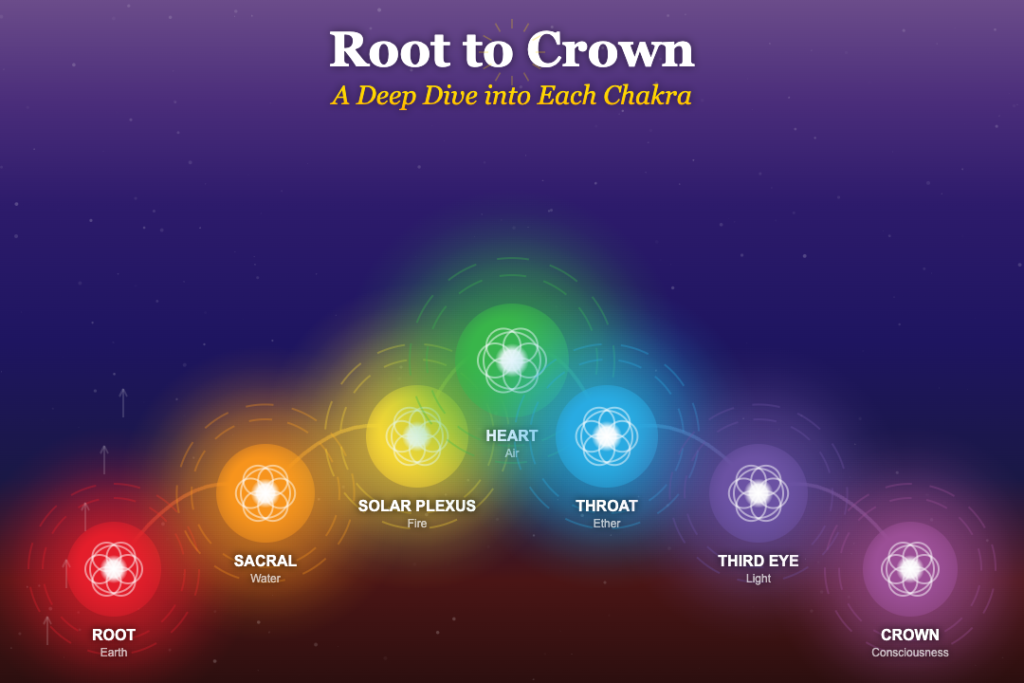
Root to Crown: A Deep Dive into Each Chakra
The chakra system is a vertical pathway of energy that begins at the base of the spine and rises to the crown of the head. Each chakra builds upon the one below it, forming a progressive journey from physical survival to spiritual awareness. Understanding each chakra in depth helps you recognize how energy flows through your body and how balance at every level supports overall well-being.
Root Chakra (Muladhara): Grounding and Survival
The root chakra forms the foundation of the entire energy system. It governs your sense of safety, stability, and connection to the physical world. When this chakra is balanced, you feel grounded, secure, and supported by life. You trust your ability to meet basic needs and remain calm during uncertainty.
An imbalanced root chakra can create fear, anxiety, or chronic insecurity. You may feel disconnected from your body or constantly worried about finances, health, or stability. Physically, this chakra influences the legs, feet, spine, and immune system, making grounding practices essential for balance.
Sacral Chakra (Svadhisthana): Emotion and Creativity
The sacral chakra is the center of emotional flow, pleasure, and creativity. It influences how you experience joy, intimacy, and emotional connection with others. A balanced sacral chakra allows emotions to move freely without overwhelm or suppression.
When this chakra is blocked, you may experience emotional numbness, guilt, or lack of inspiration. Overactivity can result in emotional volatility or dependency. This chakra governs reproductive organs and lower abdominal health, reflecting the deep connection between emotion and physical vitality.
Solar Plexus Chakra (Manipura): Power and Identity
The solar plexus chakra represents personal power, confidence, and self-worth. It shapes how you see yourself and how you assert your will in the world. When balanced, you feel motivated, decisive, and aligned with your inner strength.
Imbalance in this chakra may cause low self-esteem, passivity, or excessive control. Digestive issues often reflect disturbances here, as this chakra governs metabolism and gut health. Strengthening this center builds self-trust and emotional resilience.
Heart Chakra (Anahata): Love and Connection
The heart chakra bridges the lower physical chakras and the higher spiritual chakras. It governs love, compassion, forgiveness, and emotional healing. A balanced heart chakra allows you to give and receive love freely without fear.
Blockages may lead to emotional withdrawal, resentment, or difficulty trusting others. Overactivity can result in poor emotional boundaries. This chakra influences the heart, lungs, and circulatory system, highlighting the link between emotional openness and physical health.
Throat Chakra (Vishuddha): Expression and Truth
The throat chakra governs communication, self-expression, and authenticity. It allows you to speak your truth with clarity and confidence. When balanced, you express yourself honestly while listening deeply to others.
Imbalance may cause fear of speaking, suppressed emotions, or excessive talking. This chakra affects the throat, neck, and thyroid, reflecting how unexpressed emotions can manifest physically.
Third Eye Chakra (Ajna): Insight and Awareness
The third eye chakra is the center of intuition, perception, and inner wisdom. It helps you see beyond surface reality and trust your inner guidance. Balanced energy here supports clarity, imagination, and focused awareness.
Blockages can lead to confusion or lack of direction, while overactivity may cause mental overload or detachment. This chakra influences the brain and nervous system, making mental balance essential.
Crown Chakra (Sahasrara): Spiritual Connection
The crown chakra represents higher consciousness and spiritual unity. It connects you to universal energy and a sense of purpose beyond the self. When balanced, you experience inner peace, wisdom, and trust in life.
Imbalance may create spiritual disconnection or excessive detachment from physical reality. This chakra governs the nervous system and overall mental clarity, completing the journey from root to crown.
The Journey of Energetic Alignment
From grounding in survival to awakening spiritual awareness, each chakra plays a vital role in energetic harmony. Balance at every level supports a stable, conscious, and aligned life where mind, body, and spirit work as one.
Chakra Healing Practices for Everyday Life
Chakra healing does not require elaborate rituals or long hours of meditation. In fact, some of the most effective practices are simple habits that can be gently woven into everyday life. By consciously working with your chakras through mindful actions, you can maintain energetic balance, emotional stability, and mental clarity on a daily basis. Consistency, awareness, and intention are the keys to sustainable chakra healing.
Starting the Day with Chakra Awareness
Morning energy sets the tone for the entire day. Beginning your day with chakra awareness helps align your mind and body before external stressors arise.
Take a few moments after waking to mentally scan your body from root to crown. Notice any tension, heaviness, or emotional resistance. Even a brief awareness practice strengthens the connection between your physical sensations and energetic state. Setting a simple intention such as grounding, confidence, or clarity directs energy to the chakra that needs support.
Grounding Practices for Root Chakra Balance
Daily grounding keeps you connected to your body and the present moment. The root chakra thrives on stability and daily chakra routine.
Walking barefoot on natural surfaces, practicing slow breathing, or maintaining a consistent daily schedule helps stabilize root energy. Eating nourishing meals and prioritizing rest also reinforce physical safety. When your root chakra feels supported, anxiety decreases and focus improves.
Emotional Flow and Creativity for the Sacral Chakra
The sacral chakra benefits from emotional expression and creative movement. Suppressing emotions disrupts energy flow, while healthy expression restores balance.
Engaging in creative activities like writing, dancing, or painting allows emotions to move freely. Spending time near water or practicing gentle hip-opening stretches also supports this chakra. Honoring pleasure without guilt encourages emotional harmony and vitality.
Strengthening Personal Power through the Solar Plexus
The solar plexus chakra is activated through self-respect, discipline, and purposeful action. Everyday choices directly influence its balance.
Setting boundaries, completing tasks, and practicing positive self-talk strengthens this energy center. Physical activities that engage the core, such as walking or stretching, enhance confidence. When solar plexus energy is balanced, motivation and self-trust naturally increase.
Heart-Opening Practices for Emotional Healing
The heart chakra responds to compassion, forgiveness, and emotional honesty. Daily acts of kindness toward yourself and others support this center.
Practicing gratitude, deep breathing, or spending time in nature opens the heart. Emotional healing also involves releasing resentment and past pain. Balanced heart energy promotes healthy relationships and emotional resilience.
Conscious Communication for Throat Chakra Alignment
The throat chakra is influenced by how you express thoughts and emotions. Honest communication supports energetic flow.
Speaking your truth calmly, listening attentively, and journaling your thoughts help clear blockages. Singing or chanting can also activate this chakra. When communication aligns with inner truth, tension decreases and self-expression becomes effortless.
Cultivating Inner Awareness through the Third Eye
The third eye chakra thrives on stillness and reflection. In a busy lifestyle, creating mental space is essential.
Daily meditation, mindful observation, or reducing screen time supports intuitive clarity. Paying attention to dreams and inner guidance strengthens awareness. Balanced third eye energy enhances focus and insight.
Spiritual Connection through the Crown Chakra
The crown chakra connects daily life with a sense of higher purpose. Spiritual connection does not require rigid beliefs; it grows through trust and surrender.
Spending quiet moments in reflection, practicing mindfulness, or expressing gratitude for life’s experiences nurtures this chakra. Letting go of excessive control allows a natural sense of peace and meaning to emerge.
Integrating Chakra Healing into Daily Routine
Chakra healing becomes powerful when it is integrated, not forced. Small daily practices create lasting change.
By aligning actions, emotions, and awareness with each chakra, you support continuous energetic balance. Over time, these simple practices create a grounded, confident, compassionate, and conscious way of living that flows naturally through everyday life.
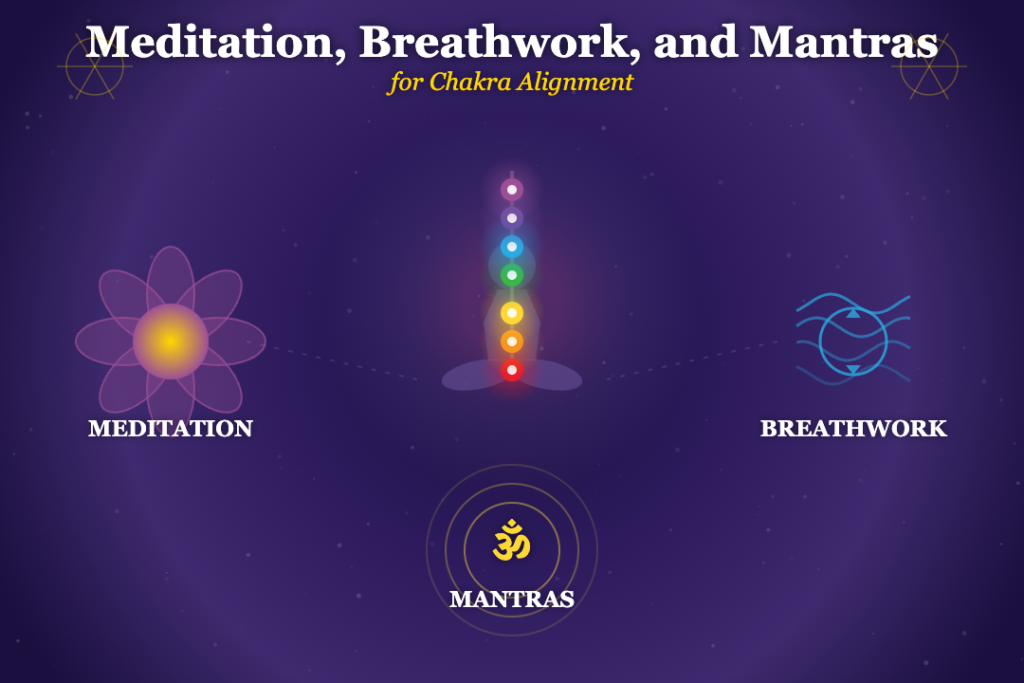
Meditation, Breathwork, and Mantras for Chakra Alignment
Meditation, breathwork, and mantras are three powerful tools for aligning the chakra system. When practiced consistently, they help clear energetic blockages, regulate emotional flow, and restore harmony between the mind, body, and spirit. Each technique works on a subtle level, guiding awareness and energy through the chakras from root to crown. Together, they form a simple yet effective foundation for daily chakra alignment.
The Role of Meditation in Chakra Healing
Meditation allows the mind to become still so energy can flow naturally. Chakra-focused meditation brings conscious awareness to each energy center, helping release stored tension and emotional patterns.
Benefits of chakra meditation include:
- Improved energy flow and balance
- Enhanced self-awareness and emotional clarity
- Reduced stress and mental overload
How to practice chakra meditation:
- Sit comfortably with your spine upright
- Close your eyes and focus on slow, steady breathing
- Visualize each chakra as a spinning wheel of light
- Move your attention gradually from root to crown
This practice strengthens the connection between consciousness and the energetic body.
Guided Meditation for the Seven Chakras
Guided chakra meditation helps beginners and experienced practitioners alike by directing focus clearly through each chakra.
Key focus points during guided meditation:
- Root Chakra: Visualize stability and grounding
- Sacral Chakra: Feel emotional flow and creativity
- Solar Plexus: Sense confidence and inner strength
- Heart Chakra: Experience compassion and openness
- Throat Chakra: Cultivate honest expression
- Third Eye Chakra: Enhance intuition and clarity
- Crown Chakra: Connect with peace and higher awareness
Spending even one to two minutes on each chakra can create noticeable energetic shifts.
Breathwork as an Energy-Regulating Tool
Breath is the bridge between the physical and energetic body. Conscious breathing helps release stagnant energy and activate underactive chakras.
Why breathwork supports chakra alignment:
- Regulates the nervous system
- Clears emotional blockages
- Directs energy intentionally through the body
Simple breathwork technique:
- Inhale deeply through the nose, expanding the abdomen
- Hold briefly while focusing on a specific chakra
- Exhale slowly through the mouth, releasing tension
Repeating this process calms the mind and restores energetic balance.
Chakra-Specific Breathing Practices
Different breathing styles can be used to activate or calm specific chakras.
Examples of chakra-focused breathwork:
- Root Chakra: Slow, deep breathing to promote grounding
- Sacral Chakra: Rhythmic breathing to encourage emotional flow
- Solar Plexus: Strong exhalations to activate confidence
- Heart Chakra: Balanced breathing to support emotional healing
- Throat Chakra: Gentle breathing with awareness in the neck area
- Third Eye Chakra: Slow nasal breathing to enhance focus
- Crown Chakra: Light, effortless breathing to support stillness
These techniques can be practiced individually or as a sequence.
Mantras and Their Vibrational Power
Mantras are sacred sounds that influence the energetic field through vibration. Each chakra resonates with a specific seed sound, or bija mantra.
Benefits of chanting mantras:
- Activates chakra energy through sound vibration
- Enhances concentration and emotional release
- Aligns mental focus with energetic intention
Chanting can be done silently or aloud, depending on comfort and environment.
Chakra Mantras and Their Meanings
Each chakra responds to a unique mantra that helps restore balance.
Seed mantras for the seven chakras:
- Root Chakra: LAM – grounding and stability
- Sacral Chakra: VAM – emotional flow and creativity
- Solar Plexus: RAM – confidence and personal power
- Heart Chakra: YAM – love and compassion
- Throat Chakra: HAM – truth and communication
- Third Eye Chakra: OM – intuition and awareness
- Crown Chakra: Silence or OM – spiritual connection
Repeating each mantra 5–10 times helps strengthen energetic resonance.
Combining Meditation, Breathwork, and Mantras
The most effective chakra alignment occurs when these practices are combined into a single flow.
Simple combined practice:
- Begin with slow breathing to relax the body
- Focus on one chakra at a time
- Visualize its color while breathing deeply
- Chant the corresponding mantra
This integrated approach amplifies healing effects and deepens awareness.
Creating a Daily Chakra Alignment Ritual
Consistency is more important than duration. Even 10–15 minutes daily can create lasting balance.
Tips for daily practice:
- Choose a quiet, comfortable space
- Practice at the same time each day
- Focus on one or two chakras if time is limited
By incorporating meditation, breathwork, and mantras into daily life, chakra alignment becomes a natural and grounding practice that supports emotional balance, mental clarity, and spiritual well-being.
Living in Alignment from the Inside Out
Chakra alignment is not a destination you reach once and forget – it is a living, breathing relationship with yourself. Each breath you take, each thought you nurture, and each choice you make sends a message through your energy system. When meditation stills the mind, breathwork awakens the body, and mantras tune your inner frequency, your chakras begin to communicate in harmony. Life feels less forced and more fluid. Challenges no longer drain your energy; they guide it.
As you move through your days, remember that balance is not about perfection but presence. Some days require grounding, others call for openness or clarity. By listening inward and responding with gentle practices, you become your own healer. Over time, chakra alignment transforms from a practice into a way of being – where your inner world supports your outer life, and your energy flows with purpose, peace, and quiet confidence.