
Emotional triggers can arise suddenly, often catching us off guard and affecting our mood, relationships and inner balance. These triggers may come from past experiences, stress, or subconscious fears we don’t even realize we carry. Aromatherapy has long been known to support emotional wellness, and today, many people use essential oils emotional triggers techniques to calm their minds, create inner space and regain control.
Essential oils interact with the limbic system, the emotional center of the brain. Their natural molecules travel through the olfactory pathways and influence how we feel, how we remember and how we respond. When you intentionally use essential oils for emotional wellness, you create gentle shifts within your mind and body that support clarity, grounding and healing.
Why Essential Oils Work for Emotional Triggers
Essential oils have a unique ability to influence emotions because scent bypasses mental filters. Aromas reach the brain faster than spoken words or conscious thoughts. This effect helps essential oils:
- Soothe emotional intensity
- Slow down racing thoughts
- Ground the nervous system
- Support emotional release
- Create a feeling of safety
Emotional triggers often bring up old memories or overwhelming feelings. Essential oils can soften these reactions by activating pleasant or calming associations. When you breathe in a grounding aroma, your body gets a signal that it’s safe to relax and respond, not react.
“Your breath becomes your anchor and each scent becomes a doorway to calm.”

Essential Oils for Emotional Triggers
Below are some of the most supportive oils for emotional balance.
Lavender Essential Oil
Lavender is one of the most widely used oils for emotional fluctuation. Its calming scent helps ease tension, reduce panic and soften irritability. When emotional triggers activate the fight or flight response, lavender brings the mind back to neutrality. It encourages slow breathing and a sense of comfort.
Frankincense Essential Oil
Frankincense helps deepen your breath and bring awareness into the present moment. It is often used to ground the mind and reduce emotional overstimulation. Many people find it supportive during reflective moments, especially when emotional triggers bring up memories or unresolved feelings. It cultivates inner strength and spiritual presence.
Rose Essential Oil
Rose oil is deeply connected to the heart and emotional healing. Its gentle floral aroma helps soothe heartbreak, grief and emotional vulnerability. When emotional triggers stem from past wounds, rose promotes feelings of compassion and self-acceptance. It is also associated with warmth and emotional softness.
Chamomile Essential Oil
Chamomile helps with irritability, frustration and emotional agitation. It is particularly helpful for individuals who feel overwhelmed easily. When triggers create emotional turbulence, chamomile restores a sense of quiet and inner peace. It supports calm decision-making and helps unwind emotional tension.
Bergamot Essential Oil
Bergamot is uplifting and refreshing, making it ideal for triggers that cause sadness or emotional heaviness. It brightens the mood and restores a sense of optimism. Bergamot also helps release stored emotions and encourages emotional confidence. Many people use it to reset their mood at the start of the day.
Ylang Ylang Essential Oil
Ylang ylang’s sweet scent soothes emotional restlessness and brings a sense of warmth. It helps those who feel overwhelmed by stress, perfectionism or self-pressure. When emotional triggers stir up panic or self-doubt, ylang ylang helps soften the intensity and restore emotional harmony.
Sandalwood Essential Oil
Sandalwood is grounding and meditative. It has a rich, earthy aroma that reduces mental chatter and emotional confusion. When triggers pull you into negative thinking, sandalwood helps anchor your energy and restore clarity. It’s also beneficial for reflective practices like journaling or meditation.
Clary Sage Essential Oil
Clary sage is known for balancing emotional highs and lows. It works especially well when emotional triggers cause mood swings or internal chaos. Its soothing aroma relaxes the mind and supports emotional release. Many people use it to reconnect with their intuition and inner stability.
Prepare Before Using Essential Oils
Preparation helps you use essential oils safely and effectively. Spend a few moments grounding yourself before beginning your emotional wellness routine.
- Sit in a comfortable space with soft lighting
- Keep your essential oils within reach
- Have a diffuser or cotton pad ready
- Keep water nearby to stay hydrated
- Decide what emotional trigger you want to address
“Preparation is a quiet promise you make to your inner self.”
Safety reminders are essential when preparing essential oils:
- Always dilute essential oils before applying to the skin
- Perform a patch test if using a new oil
- Use gentle inhalation if you’re sensitive to strong scents
- Keep oils away from eyes and open wounds
- Use only high-quality pure essential oils
Taking these small steps creates a calm atmosphere so your nervous system can relax into the process.
Tips for Using Essential Oils for Emotional Triggers
Simple tips can enhance your aromatherapy practice. These suggestions help create consistency and emotional grounding.
- Use oils at the first sign of emotional discomfort
- Pair scents with slow breathing
- Choose grounding oils when feeling overwhelmed
- Choose uplifting oils when feeling heavy
- Keep a pocket-sized roller blend for stressful moments
- Connect essential oils with daily habits like journaling or meditation
“Each drop of aroma carries a moment of healing.”
Consistency matters more than intensity. A calm, daily approach supports emotional resilience and helps rewire emotional responses over time.
Practices for Emotional Trigger Support
You can incorporate essential oils into various practices that support emotional balance. The goal is to create sensory anchors that remind your mind and body to soften, breathe and return to equilibrium.
Aromatic Breathing
Add one drop of your chosen oil to your palm, rub softly and inhale. Breathe slowly for a few minutes. This helps regulate emotional intensity and supports nervous system balance.
Diffusion Ritual
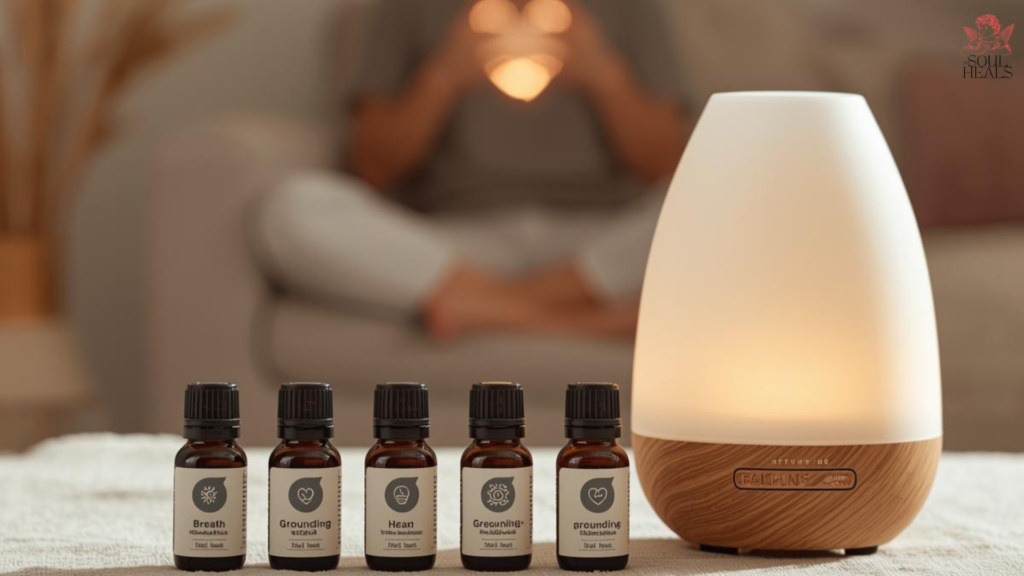
Diffuse oils in your room for 10 to 20 minutes. Choose grounding oils when dealing with worry, or uplifting oils when experiencing emotional heaviness. Diffusion fills your space with a supportive aura.
Topical Heart-Point Application
Apply diluted essential oil to your chest or heart area. This technique supports emotional openness and encourages gentle release. It is helpful during emotional conversations or moments of inner reflection.
Journaling with Aroma
Before journaling, inhale the oil of your choice. This creates an emotional association between the scent and clarity. The aroma helps bring calm, making it easier to explore your emotional landscape.
Bedtime Grounding
Apply soothing oils like lavender or sandalwood before sleep. Emotional triggers often surface at night, and calming scents help quiet the mind and settle the heart.
Morning Reset
Use bright aromas like bergamot or citrus to begin your day with energy and clarity. This reduces emotional reactivity and helps reset your emotional tone.
Mindfulness Practice
Pair essential oils with a five-minute mindfulness session. The aroma helps anchor your attention, making the practice deeper and more grounding.
“Scent Becomes the Softest Path Back to Yourself”
Create a personal relationship with your chosen oils. Let each scent be a reminder that you have inner resources to navigate emotional triggers with strength and gentleness.

Explore Our Free Divination Tools
Unlock guidance, clarity, and insight with our collection of mystical tools — designed to help you understand love, destiny, and life’s deeper meaning.